Bouncingbet: The Soapy Perennial That’s Easy to Grow (Maybe Too Easy!)
If you’ve ever wondered about that cheerful pink-flowered plant spreading along roadsides and vacant lots, chances are you’ve spotted bouncingbet (Saponaria officinalis). Also known as soapwort, this hardy perennial has quite a story to tell – and a few surprises up its leafy sleeves.
What Exactly Is Bouncingbet?
Bouncingbet is a non-native perennial that originally hails from Europe and western Asia. This sturdy forb (that’s gardener-speak for a non-woody flowering plant) has made itself quite at home across North America, establishing populations from coast to coast and border to border.
This adaptable plant grows throughout an impressive range, including all Canadian provinces from British Columbia to Newfoundland, and virtually every U.S. state from Alabama to Wyoming. You’ll find it thriving in diverse climates and conditions – a testament to its remarkable adaptability.
- Species observed
- No observations
Why the Name Soapwort?
Here’s where things get interesting! Bouncingbet earned its soapwort nickname because its roots and leaves contain saponins – natural compounds that create a soap-like lather when crushed and mixed with water. Colonial settlers and earlier generations actually used this plant as a gentle soap substitute for washing delicate fabrics and even their hair.
What Does Bouncingbet Look Like?
Bouncingbet is a moderate-sized perennial that typically reaches about 2.2 feet tall. Here’s what to look for:
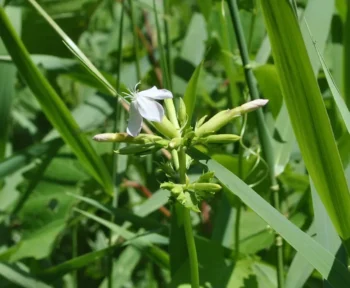
- Dense clusters of fragrant pink to purple flowers (occasionally white)
- Blooms appear in late spring through summer
- Oval, medium-textured green leaves
- Erect growth habit with a rhizomatous (spreading) root system
- Brown seeds that aren’t particularly showy
Growing Conditions and Care
One of bouncingbet’s biggest selling points is its easygoing nature. This plant is remarkably tolerant of challenging conditions:
- Soil: Adapts to coarse and medium-textured soils; pH range of 5.0-7.0
- Water: Highly drought tolerant once established
- Light: Intermediate shade tolerance, but prefers more sun
- Climate: Hardy in USDA zones 3-9; tolerates temperatures down to -18°F
- Maintenance: Very low maintenance once established
Bouncingbet typically grows in upland areas rather than wetlands, though it can occasionally tolerate some moisture. It’s particularly well-suited to areas with 32-45 inches of annual precipitation.
The Good, The Bad, and The Spreading
The Good: Bouncingbet offers several garden benefits. It attracts pollinators with its fragrant flowers, requires minimal care, and can fill in difficult spots where other plants struggle. Its moderate growth rate means it won’t take over overnight, and it provides decent summer color.
The Consideration: As a non-native species that spreads via rhizomes, bouncingbet can become quite established once it settles in. While its invasive status is currently unknown, its widespread distribution suggests it’s quite successful at reproducing and spreading naturally.
Where Bouncingbet Fits in Your Landscape
Bouncingbet works well in:
- Cottage garden settings
- Naturalized or wildflower areas
- Spots where you need tough, low-maintenance ground cover
- Areas with poor soil where other plants struggle
However, you might want to think twice about planting it in formal gardens or near sensitive native plant communities, as its spreading habit can be vigorous.
Planting and Propagation
Bouncingbet is typically propagated by container plants or sprigs rather than seed. While seeds are abundant (about 250,000 per pound!), seedling vigor is relatively low. The plant’s vegetative spreading does most of the work once established.
Plant in spring after frost danger passes, spacing plants 2-3 feet apart if you’re intentionally establishing a colony.
Native Alternatives to Consider
Since bouncingbet is non-native, you might want to consider these native alternatives that offer similar benefits:
- Wild bergamot (Monarda fistulosa) for fragrant flowers and pollinator appeal
- Purple coneflower (Echinacea purpurea) for summer color and easy care
- Wild ginger (Asarum canadense) for ground cover in shadier spots
The Bottom Line
Bouncingbet is an easy-going perennial that can solve problems in challenging garden spots. While it’s not native to North America, it’s currently not classified as invasive or noxious in most areas. If you choose to grow it, be mindful of its spreading nature and consider containing it in areas where you want to protect native plant communities. As with any non-native plant, it’s worth exploring native alternatives that can provide similar benefits while supporting local ecosystems.
Whether you call it bouncingbet or soapwort, this resilient perennial certainly knows how to make itself at home – just make sure you’re comfortable with a plant that might become a very permanent garden resident!