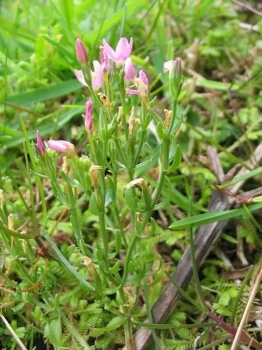
Branched Centaury: A Delicate Pink Wildflower for Low-Maintenance Gardens
If you’re looking for a charming little wildflower that practically grows itself, branched centaury (Centaurium pulchellum) might just be the unassuming hero your garden needs. This petite annual herb produces clouds of tiny pink flowers that dance in the breeze, creating a cottage garden feel wherever it takes root.
What Is Branched Centaury?
Branched centaury is a small annual forb – essentially a non-woody flowering plant that completes its entire life cycle in one growing season. True to its name, this little charmer has a distinctly branched growth habit, creating a delicate, airy structure that reaches about 6-12 inches tall. The plant produces small, five-petaled flowers in shades of pink to rose, typically blooming from mid to late summer.
Where Does It Grow?
Originally native to Europe and western Asia, branched centaury has made itself at home across much of North America. You’ll find it thriving in diverse locations from the Maritime provinces of Canada down through most of the continental United States, including states like Colorado, Connecticut, Illinois, Louisiana, Maine, Michigan, Minnesota, Texas, and many others.
- Species observed
- No observations
The Garden Appeal
What makes branched centaury special isn’t flashy blooms or towering height – it’s the subtle charm it brings to naturalized areas and cottage-style gardens. The delicate pink flowers create a soft, romantic haze when planted in drifts, and the plant’s ability to self-seed means you’ll likely have new plants appearing in perfect spots year after year.
The flowers are also pollinator-friendly, attracting small bees and butterflies who appreciate the accessible nectar. While it may not be a major pollinator powerhouse, every little bit helps support local beneficial insects.
Growing Conditions and Care
Here’s where branched centaury really shines – it’s remarkably undemanding. This adaptable little plant prefers:
- Full sun exposure
- Well-draining soils (sandy or gravelly soils are perfect)
- Areas that aren’t too rich or fertile
- Minimal watering once established
According to wetland indicators, branched centaury typically prefers non-wetland conditions but can tolerate some moisture variation. It’s particularly well-suited to disturbed soils and areas where other plants might struggle.
Planting and Propagation
The easiest way to grow branched centaury is to direct seed it in your garden in spring after the last frost. Simply scatter seeds in the desired area and lightly rake them into the soil. The plant will do the rest, often self-seeding for future seasons.
Since it’s an annual, you won’t need to worry about dividing or pruning – just let it complete its natural cycle and collect seeds if you want to expand to new areas.
Should You Plant It?
Branched centaury can be a lovely addition to low-maintenance, naturalized gardens, especially if you appreciate subtle beauty over bold statements. However, since it’s not native to North America, you might want to consider some beautiful native alternatives that provide similar aesthetic appeal while supporting local ecosystems:
- Wild bergamot (Monarda fistulosa) for pink summer blooms
- Purple prairie clover (Dalea purpurea) for delicate pink flowers
- Rose pink (Sabatia angularis) for similar pink, five-petaled flowers
If you do choose to grow branched centaury, it’s a well-behaved plant that won’t cause problems in your garden. Just remember that supporting native plants is always the gold standard for creating wildlife habitat and maintaining healthy local ecosystems.
The Bottom Line
Branched centaury offers old-world charm with minimal fuss, making it a reasonable choice for gardeners who love cottage garden aesthetics and don’t mind non-native plants. Its delicate pink flowers and self-seeding habit can create lovely naturalized drifts, though native alternatives might serve your local ecosystem even better. Whatever you choose, you’ll be adding beauty and pollinator resources to your garden landscape.