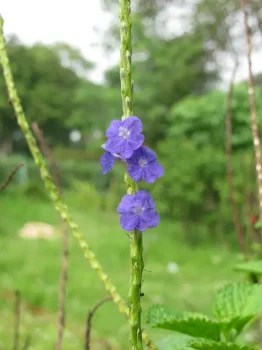
Branched Porterweed: A Lesser-Known Hawaiian Garden Resident
If you’ve been wandering around Hawaiian gardens and spotted a small flowering herb that seems to pop up in various spots, you might have encountered branched porterweed (Stachytarpheta australis). This unassuming little plant has quietly made itself at home in the islands, though it’s not originally from there.
What Exactly Is Branched Porterweed?
Branched porterweed is a non-native herb that belongs to the verbena family. Unlike its more famous cousin, blue porterweed, this species tends to fly under the radar. It’s what botanists call a forb – essentially a flowering plant that doesn’t develop woody stems like shrubs or trees. Think of it as nature’s version of a perennial flower that keeps things simple.
This adaptable little plant can behave as either an annual or perennial, depending on growing conditions. It produces small flowers and has a branching growth pattern that gives it its common name.
Where You’ll Find It
Currently, branched porterweed has established itself in Hawaii, where it reproduces on its own without human intervention. It’s managed to adapt well to island life, though we don’t have detailed information about exactly which Hawaiian islands it calls home.
- Species observed
- No observations
The Garden Reality Check
Here’s where things get a bit tricky for gardeners. While branched porterweed isn’t currently listed as invasive or noxious, we simply don’t have enough research about its long-term impact on Hawaiian ecosystems. It’s one of those plants that exists in a gray area – not necessarily harmful, but not necessarily beneficial either.
The plant does have some interesting characteristics that might appeal to gardeners:
- It’s adaptable to both wet and dry conditions (facultative wetland status)
- It can handle various growing environments
- It doesn’t require intensive maintenance
Growing Considerations
If you’re thinking about branched porterweed for your garden, here’s what we know: it’s fairly tolerant of different moisture levels, which makes it relatively low-maintenance. However, specific information about soil preferences, sunlight needs, and care requirements is limited for this particular species.
Since it can function in both wetland and non-wetland environments, it’s likely quite adaptable to various garden situations. But without detailed growing guides, you’d essentially be experimenting.
A Better Alternative: Go Native
Given the limited information about branched porterweed and its non-native status, Hawaiian gardeners might want to consider native alternatives that provide similar benefits with known ecological value. Native Hawaiian plants are adapted to local conditions, support native wildlife, and help preserve the islands’ unique ecosystem.
Some native options to explore include native Hawaiian sedges, grasses, or other herbaceous plants that naturally occur in similar habitats.
The Bottom Line
Branched porterweed represents one of those garden mysteries – a plant that’s present but not well-documented in terms of its garden potential or ecological impact. While it’s not flagged as problematic, the lack of detailed information makes it difficult to recommend confidently.
For Hawaiian gardeners, focusing on well-researched native plants or non-native species with known benefits might be a more reliable path to garden success. If you do encounter branched porterweed in your garden, it’s probably not cause for alarm, but it’s also not necessarily something to actively cultivate.
Sometimes the most interesting garden stories are about the plants we choose not to grow, leaving space instead for species that we know will thrive and contribute positively to our local environment.