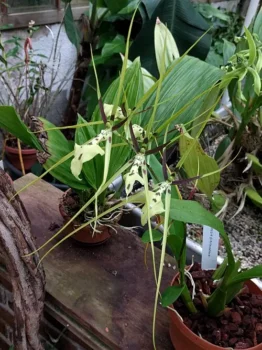
Brassia gireoudiana: The Mystery Plant That Has Botanists Scratching Their Heads
Ever stumbled across a plant name that seems to exist in a botanical twilight zone? Meet Brassia gireoudiana – a name that’s as intriguing as it is elusive. If you’re here because you’ve encountered this mysterious plant name somewhere and want to know whether it deserves a spot in your garden, you’re not alone in your confusion.
What We Know (And Don’t Know) About Brassia gireoudiana
Here’s the thing about Brassia gireoudiana – it’s classified as a monocot, which puts it in the same broad family as grasses, lilies, and orchids. But beyond that basic classification, reliable information about this plant is surprisingly scarce. There’s no widely recognized common name, no clear native range, and no established growing guidelines that we can confidently share.
This lack of information could mean several things: it might be an extremely rare species that hasn’t been well-documented, it could be a regional name that isn’t widely recognized, or there might be some confusion with the plant’s identification or naming.
When Plant Names Lead You Down Rabbit Holes
As gardeners, we’ve all been there – you see an intriguing plant name, maybe on a seed packet, in an old gardening book, or mentioned by a fellow gardener, and you’re determined to track it down. Sometimes these botanical detective stories have happy endings, and sometimes they lead to dead ends like this one.
If you’re specifically looking for a plant called Brassia gireoudiana, here are some steps you can take:
- Double-check the spelling and see if it might be a similar-sounding plant name
- Consult with local botanical gardens or extension offices
- Check if it might be a regional common name for a more widely known species
- Consider whether it might be confused with plants in the Brassia orchid genus
What to Do When You Can’t Find Your Plant
Don’t let this botanical mystery discourage you! Instead of chasing after an elusive species, consider exploring well-documented native plants in your area. Native plants offer all the benefits you’re likely looking for – they’re adapted to local conditions, support local wildlife, and often require less maintenance once established.
Your local native plant society or extension office can point you toward monocot natives that might scratch the same gardening itch. Think native grasses for texture and movement, native lilies for stunning blooms, or native sedges for interesting foliage – all with the added bonus of detailed growing information and proven garden performance.
The Bottom Line
While Brassia gireoudiana remains an enigma in the plant world, this little mystery serves as a good reminder that not every plant name you encounter will lead to a garden-worthy discovery. Sometimes the journey of plant identification is just as interesting as the destination, even when that destination turns out to be a botanical question mark.
If you do happen to have reliable information about Brassia gireoudiana – or if you discover it’s actually a case of mistaken plant identity – the gardening community would love to solve this puzzle together!