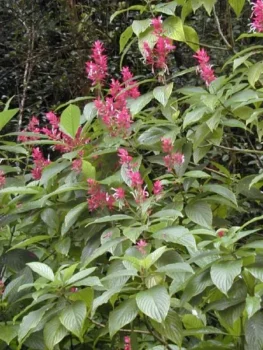
Brazilian Red-Cloak: A Tropical Showstopper for Warm Climate Gardens
If you’re looking to add some serious tropical flair to your garden, the Brazilian red-cloak (Megaskepasma) might just be the eye-catching specimen you’ve been searching for. This stunning plant brings a burst of vibrant color and exotic appeal that’s hard to ignore.
What Makes Brazilian Red-Cloak Special
Brazilian red-cloak is a true attention-grabber with its dramatic display of bright red bracts that can reach impressive sizes. These aren’t actually flowers – the real flowers are small and white – but those scarlet bracts steal the show and last for months. The plant itself can grow quite large, making it perfect as a focal point or backdrop in your landscape design.
Where Does It Come From?
This tropical beauty hails from Central and South America, particularly Costa Rica and Venezuela, where it thrives in warm, humid conditions. Since it’s not native to the United States, you might want to consider native alternatives that provide similar benefits to local wildlife.
Is Brazilian Red-Cloak Right for Your Garden?
Before you fall head over heels for this tropical stunner, consider whether it fits your garden’s needs:
- Climate requirements: Only suitable for USDA zones 9-11, as it’s quite frost-sensitive
- Space needs: Can grow quite large, so make sure you have adequate room
- Maintenance: Requires consistent moisture and protection from cold
- Garden style: Perfect for tropical, subtropical, or exotic-themed landscapes
Wildlife and Pollinator Benefits
One of the Brazilian red-cloak’s redeeming qualities is its appeal to pollinators. Hummingbirds are particularly drawn to those bright red bracts, and butterflies also visit for nectar. While it does provide some wildlife value, native plants typically offer more comprehensive benefits to local ecosystems.
Growing Conditions and Care
If you decide to give Brazilian red-cloak a try, here’s what it needs to thrive:
- Light: Partial shade to full sun (some afternoon shade in hottest climates)
- Soil: Well-draining, consistently moist soil
- Humidity: Appreciates high humidity levels
- Water: Regular watering, don’t let it dry out completely
- Temperature: Protect from temperatures below 50°F
Planting and Care Tips
Success with Brazilian red-cloak comes down to mimicking its tropical homeland:
- Plant in spring after all danger of frost has passed
- Choose a location with morning sun and afternoon shade in hot climates
- Mulch around the base to retain moisture and regulate soil temperature
- Prune after flowering to maintain shape and encourage new growth
- In colder zones, consider growing in containers that can be moved indoors
Consider Native Alternatives
While Brazilian red-cloak can be a stunning addition to warm climate gardens, consider these native alternatives that provide similar visual impact while supporting local wildlife:
- Cardinal flower (Lobelia cardinalis) for red color and hummingbird attraction
- Coral honeysuckle (Lonicera sempervirens) for tropical look and wildlife benefits
- Firebush (Hamelia patens) in southern regions for similar red-orange appeal
The Bottom Line
Brazilian red-cloak is undeniably gorgeous and can create a stunning tropical accent in the right setting. If you live in a warm climate and want to add some exotic flair to your landscape, it can be a rewarding choice. Just remember to give it the warm, humid conditions it craves, and consider balancing your garden with native plants that provide maximum benefits to local wildlife. Happy gardening!