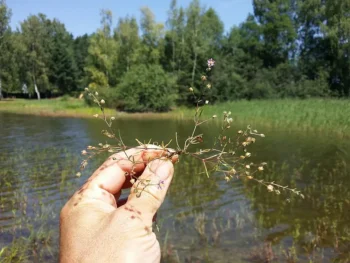
Bristleseed Sandspurry: A Specialized Wetland Annual for Unique Garden Challenges
Looking for a plant that thrives in challenging, salty, wet conditions where most other plants throw in the towel? Meet bristleseed sandspurry (Spergularia echinosperma), a small but mighty annual that’s made a name for itself in some pretty tough growing situations. While it might not win any beauty contests, this little forb has some interesting qualities that might make it worth considering for very specific landscaping needs.
What Exactly is Bristleseed Sandspurry?
Bristleseed sandspurry is an annual forb – basically a non-woody plant that completes its entire life cycle in one growing season. Originally from Eurasia, this plant has established itself across several U.S. states including Alabama, Georgia, Louisiana, Texas, and Wyoming. It’s what botanists call a naturalized species, meaning it reproduces on its own in the wild without human help and has become part of the landscape.
You might also see this plant listed under its synonym Spergularia salsuginea var. bracteata in some older references, but Spergularia echinosperma is the currently accepted name.
Where Does it Grow?
This adaptable little plant has found homes across diverse regions of the United States, from the humid Southeast to the arid Southwest. You’ll find established populations in Alabama, Georgia, Louisiana, Texas, and Wyoming – quite a geographic spread that speaks to its adaptability.
- Species observed
- No observations
The Wetland Specialist
Here’s where bristleseed sandspurry really stands out: it’s classified as an Obligate Wetland plant across all regions where it grows. This means it almost always occurs in wetlands and has a serious preference for consistently moist to wet growing conditions. Whether you’re in the Arid West, Atlantic and Gulf Coastal Plain, Great Plains, or Western Mountains, this plant is going to want its feet wet.
Should You Grow Bristleseed Sandspurry?
The honest answer? It depends on what you’re trying to accomplish. This isn’t a plant for your typical flower border or herb garden. However, it might be exactly what you need if you’re dealing with:
- Saline or salt-affected soils
- Consistently wet areas that challenge other plants
- Specialized restoration projects in wetland areas
- Coastal gardens where salt tolerance is crucial
Since bristleseed sandspurry isn’t native to North America, you might want to consider native alternatives that provide similar benefits, such as native sedges, rushes, or other wetland forbs that naturally occur in your region.
Growing Bristleseed Sandspurry Successfully
If you decide this plant fits your specific needs, here’s what you need to know about keeping it happy:
Growing Conditions
- Moisture: Consistent wetness is non-negotiable – this plant lives up to its wetland classification
- Soil: Tolerates and even prefers saline or alkaline conditions that would stress most plants
- Light: Likely prefers full sun to partial shade, typical of most wetland species
What to Expect
As an annual, bristleseed sandspurry will complete its entire life cycle in one season. It produces small, inconspicuous flowers and forms a low-growing, mat-like habit. Don’t expect showy blooms or dramatic height – this is a plant valued more for its tough-as-nails growing requirements than its ornamental appeal.
The Bottom Line
Bristleseed sandspurry fills a very specific niche in the gardening world. It’s not going to be the star of your perennial border, but if you’re dealing with challenging wet, salty conditions and need something that can handle what most plants cannot, it might be worth considering. Just remember to explore native alternatives first – your local ecosystem will thank you for it!
As with any specialized plant, success with bristleseed sandspurry comes down to matching the plant to the right conditions. Give it the wet, salty environment it craves, and this little annual will reward you by thriving where others fail.