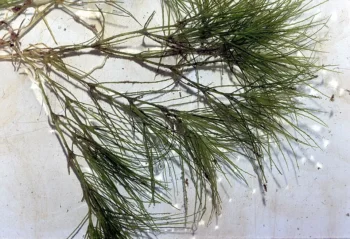
Brittle Waternymph: An Invasive Aquatic Plant You Should Avoid in Your Water Garden
If you’re planning a water garden or managing an existing pond, there’s one plant you’ll want to steer clear of: brittle waternymph (Najas minor). While it might sound harmlessly delicate, this small aquatic plant packs a big invasive punch that can quickly turn your serene water feature into a maintenance nightmare.
What Is Brittle Waternymph?
Brittle waternymph is a small, annual aquatic plant that lives entirely underwater. True to its name, this plant is quite fragile – stems break easily when disturbed. It’s a non-native species that was introduced to North America from Europe and Asia, and it has since spread across much of the continent.
Don’t let its delicate appearance fool you. This little plant is a master colonizer that can rapidly spread through water bodies, forming dense underwater mats that crowd out native aquatic vegetation.
Where You’ll Find It (Unfortunately)
Brittle waternymph has established itself across 29 states and Ontario, Canada, spreading from Alabama to Vermont and from California to Florida. It thrives in a wide range of freshwater environments, from ponds and lakes to slow-moving streams and wetlands.
- Species observed
- No observations
Why You Should Avoid This Plant
Here’s where things get serious. Brittle waternymph isn’t just an unwelcome garden guest – it’s officially recognized as problematic in several states:
- Prohibited species in Minnesota, North Carolina, and Wisconsin
- Potentially invasive and prohibited in Connecticut
- Watch list species in Alabama
- Class C noxious weed in Alabama
The plant’s rapid growth rate and aggressive spreading behavior make it a threat to native aquatic ecosystems. Once established, it can be extremely difficult to remove.
How to Identify Brittle Waternymph
Knowing what to look for can help you spot and report this invasive species:
- Size: Grows up to 2 feet tall underwater
- Leaves: Very narrow, fine-textured, and arranged in whorls around the stem
- Flowers: Tiny, green, and inconspicuous (blooms in late summer)
- Growth pattern: Forms dense, colonizing mats
- Habitat: Always found in wetland environments, completely submerged
The plant’s brittle nature means stems snap easily when touched, which actually aids in its spread as fragments can root and establish new colonies.
Growing Conditions (What to Watch For)
While we don’t recommend growing this plant, understanding its preferred conditions can help you identify potential problem areas:
- Water requirements: High moisture use, obligate wetland species
- Soil tolerance: Adapts to fine and medium-textured soils
- pH range: 6.3 to 7.2
- Temperature: Minimum 47°F
- Spread: Moderate seed spread, slow vegetative spread initially
Better Alternatives for Your Water Garden
Instead of risking an invasive species, consider these native aquatic plants that provide beauty without the ecological baggage:
- Wild celery (Vallisneria americana) – Provides similar underwater structure
- Coontail (Ceratophyllum demersum) – Native submerged plant
- Water milfoil species (native Myriophyllum varieties) – Feathery underwater foliage
- Pondweeds (native Potamogeton species) – Diverse group of native aquatics
What to Do If You Find It
If you suspect you’ve found brittle waternymph in your water feature or local waterway, contact your state’s natural resources department or extension office. Many states have reporting systems for invasive species, and early detection is key to preventing further spread.
Remember, the best defense against invasive plants is prevention. Choose native alternatives for your water garden, and you’ll create a beautiful aquatic environment that supports local wildlife without contributing to ecological problems. Your pond – and your local ecosystem – will thank you for it!