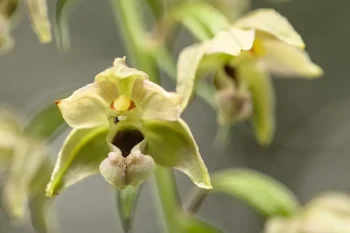
Broadleaf Helleborine: A Beautiful but Potentially Problematic Orchid
Meet the broadleaf helleborine (Epipactis helleborine), a perennial orchid that’s as intriguing as it is controversial in North American gardens. This European native has made quite the journey across the pond, establishing itself throughout much of Canada and the United States. But before you fall head-over-heels for this woodland beauty, there are some important things every gardener should know.
What is Broadleaf Helleborine?
Broadleaf helleborine is a terrestrial orchid that belongs to the forb family – essentially a non-woody perennial plant. Standing tall with distinctive pleated leaves and elegant spikes of greenish-purple flowers, it’s certainly eye-catching in the garden. You might also see it listed under its scientific synonyms Epipactis latifolia or Serapias helleborine in older gardening references.
This shade-loving perennial typically reaches heights of 1-4 feet and spreads through underground rhizomes, creating colonies over time. Its flowers bloom in summer, arranged in terminal racemes that can contain 10-50 individual blooms.
Where Does It Grow?
Originally from Europe and Asia, broadleaf helleborine has naturalized extensively across North America. You’ll find established populations in:
- Canadian provinces: British Columbia, New Brunswick, Nova Scotia, Ontario, Prince Edward Island, Quebec, and Newfoundland
- U.S. states spanning from coast to coast, including Arkansas, California, Colorado, Connecticut, Illinois, Michigan, New York, Oregon, Washington, and many others
This wide distribution speaks to the plant’s adaptability – perhaps a little too well, as we’ll discuss next.
- Species observed
- No observations
The Invasive Reality Check
Here’s where things get complicated. While broadleaf helleborine is undeniably attractive, it’s classified as invasive in Wisconsin with a Restricted status. This means it has the potential to spread aggressively and outcompete native species. The plant’s ability to thrive in various conditions and reproduce both through seeds and rhizomes makes it particularly successful at establishing itself in new areas.
As responsible gardeners, we need to weigh the aesthetic appeal against the potential ecological impact. In many regions, this orchid can displace native wildflowers and disrupt established woodland ecosystems.
Growing Conditions and Care
If you’re in an area where broadleaf helleborine is already established and you’re curious about its care requirements, here’s what this adaptable orchid prefers:
- Light: Partial to full shade
- Soil: Moist, well-draining soil; tolerates various soil types
- Water: Consistent moisture preferred
- Hardiness: USDA zones 3-8
- Maintenance: Low maintenance once established
According to wetland classifications, broadleaf helleborine typically prefers upland sites, though it can occasionally tolerate wetland conditions in some regions. It’s particularly at home in woodland settings with filtered light.
Wildlife and Pollinator Benefits
Like many orchids, broadleaf helleborine does attract pollinators, particularly wasps and flies. However, the question remains whether supporting a non-native species is the best use of garden space when native alternatives could provide similar or superior benefits to local ecosystems.
Better Alternatives for Your Garden
Instead of planting broadleaf helleborine, consider these native orchid alternatives that provide similar woodland charm without the invasive concerns:
- Pink lady’s slipper (Cypripedium acaule)
- Wild ginger (Asarum canadense) – not an orchid but provides similar ground coverage
- Trout lily (Erythronium americanum)
- Bloodroot (Sanguinaria canadensis)
The Bottom Line
While broadleaf helleborine is undeniably beautiful and relatively easy to grow, its invasive potential makes it a questionable choice for responsible gardeners. If you discover it growing wild on your property, you can appreciate its unique beauty while keeping an eye on its spread. However, for new plantings, native alternatives will better serve your local ecosystem while providing similar aesthetic appeal.
Remember, the most beautiful gardens are those that work in harmony with their local environment. By choosing native plants, you’re not just creating a lovely space – you’re contributing to the health of your regional ecosystem.