Broadleaf Spurge: What Every Gardener Should Know About This European Annual
If you’ve stumbled across a small, unassuming plant with milky sap in your garden, you might be looking at broadleaf spurge (Euphorbia platyphyllos). While it sounds like it should be some kind of impressive foliage plant, this European native is actually more of a garden gate-crasher than an invited guest.
Getting to Know Broadleaf Spurge
Broadleaf spurge is an annual forb – basically a non-woody herbaceous plant that completes its entire life cycle in one growing season. Don’t let the name fool you; while it’s called broadleaf, the leaves aren’t particularly broad or noteworthy. This plant is also known by its botanical synonyms Galarhoeus platyphyllos and Tithymalus platyphyllos, though most gardeners simply call it broadleaf spurge or just that weedy spurge.
Where You’ll Find It
Originally from Europe and western Asia, broadleaf spurge has made itself at home across parts of North America. You can find it established in:
- Canada: Ontario and Quebec
- United States: Illinois, Louisiana, Massachusetts, Michigan, Missouri, New York, Ohio, Pennsylvania, and Vermont
This non-native plant has the rather impressive ability to reproduce and persist in the wild without any help from humans – which isn’t necessarily a good thing when you’re trying to maintain a tidy garden.
- Species observed
- No observations
What Does It Look Like?
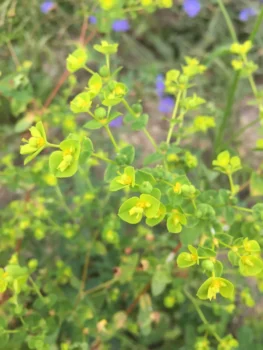
Broadleaf spurge isn’t going to win any beauty contests. It’s a modest annual that produces small, yellowish-green flowers arranged in tiny clusters. The plant has that characteristic milky sap that all spurges are famous for (and which can be irritating to skin, so handle with gloves!). Its overall appearance is rather unremarkable – think of it as the botanical equivalent of beige wallpaper.
Should You Plant Broadleaf Spurge?
Here’s where we get to the heart of the matter: most gardeners won’t want to intentionally plant broadleaf spurge. While it’s not officially classified as invasive, it’s definitely not pulling its weight in the garden department. It offers minimal ornamental value and doesn’t provide significant benefits to local wildlife or pollinators.
The plant is quite adaptable to various growing conditions and can thrive in disturbed soils, full sun to partial shade, and across USDA hardiness zones 3-9. But just because it can grow easily doesn’t mean it should be your first choice for garden plantings.
Better Native Alternatives
Instead of broadleaf spurge, consider these native alternatives that offer similar adaptability but with much more garden value:
- Wild bergamot (Monarda fistulosa) – attracts pollinators and has aromatic foliage
- Purple coneflower (Echinacea purpurea) – gorgeous flowers and excellent wildlife value
- Black-eyed Susan (Rudbeckia species) – cheerful blooms and easy care
- Native asters – late-season pollinator magnets
Managing Broadleaf Spurge in Your Garden
If broadleaf spurge has already moved into your garden uninvited, don’t panic. As an annual, it’s relatively easy to manage:
- Hand-pull young plants before they set seed (wear gloves to avoid skin irritation from the sap)
- Maintain healthy, dense plantings of desirable plants to reduce available space for weeds
- Apply mulch to suppress germination of spurge seeds
- Address the issue early in spring when plants are small and easier to remove
The Bottom Line
While broadleaf spurge isn’t a garden villain, it’s not exactly a garden hero either. This European native falls into the meh category of plants – not harmful enough to cause major concern, but not beneficial enough to deserve a spot in your carefully planned landscape. Save your garden space for native plants that will support local ecosystems while providing the beauty and function you’re looking for.
Remember, every plant choice is an opportunity to support biodiversity and create habitat for local wildlife. Why settle for a ho-hum non-native when you could plant something that truly belongs and contributes to your local ecosystem?