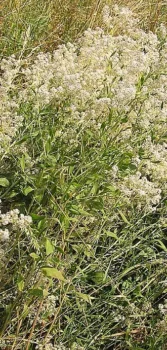
Broadleaved Pepperweed: An Invasive Species to Avoid in Your Garden
If you’ve stumbled across information about broadleaved pepperweed (Lepidium latifolium) while researching plants for your garden, we need to have a serious chat. This isn’t your typical gardening advice post where I’ll share growing tips and design ideas. Instead, this is more of a proceed with extreme caution warning about a plant that looks innocent enough but can wreak havoc on local ecosystems.
What is Broadleaved Pepperweed?
Broadleaved pepperweed is a perennial forb – essentially a non-woody plant that comes back year after year. You might also see it listed under its synonym Cardaria latifolia. Don’t let the pretty name fool you; this European and Asian native has become a major troublemaker across North America.
Where You’ll Find It (Unfortunately)
This invasive species has spread like wildfire across the continent. You can find established populations in Alberta, British Columbia, Manitoba, and Quebec in Canada, plus a whopping 19 U.S. states including Arizona, California, Colorado, Connecticut, Idaho, Illinois, Indiana, Kansas, Massachusetts, Missouri, Montana, Nebraska, Nevada, New Mexico, New York, Oregon, Texas, Utah, Washington, and Wyoming.
- Species observed
- No observations
Why This Plant is Trouble
Here’s where things get serious. Broadleaved pepperweed isn’t just a little aggressive – it’s officially classified as invasive and prohibited in multiple states:
- Connecticut: Invasive, Prohibited
- New Mexico: Prohibited
- Wisconsin: Prohibited
- Alaska: Listed as a Prohibited Noxious Weed
These classifications exist because this plant reproduces spontaneously in the wild and persists without any human help, often crowding out native species that local wildlife depends on.
What Makes It So Invasive?
Broadleaved pepperweed is incredibly adaptable. Its wetland status varies by region – it can thrive in wetlands, uplands, or anything in between. This flexibility means it can colonize diverse habitats, from disturbed roadsides to pristine wetlands. Once established, it forms dense patches that can dominate an area.
Should You Plant It? Absolutely Not!
I cannot stress this enough: do not intentionally plant broadleaved pepperweed. Even if you find it for sale somewhere (which would be concerning), resist the temptation. This plant may produce clusters of small white flowers that could attract some pollinators, but any minor benefits are vastly outweighed by the ecological damage it causes.
Better Alternatives for Your Garden
Instead of risking ecological disaster, consider these native alternatives that offer similar benefits without the invasive baggage:
- Wild bergamot (Monarda fistulosa) for pollinator-friendly flowers
- White prairie clover (Dalea candida) for white blooms
- Yarrow (Achillea millefolium) for drought tolerance and white flowers
- Native sedums for low-maintenance groundcover
What to Do If You Find It
If you discover broadleaved pepperweed on your property, don’t panic, but do take action. Contact your local extension office or invasive species coordinator for removal guidance. Early detection and rapid response are key to preventing further spread.
The Bottom Line
Sometimes being a responsible gardener means knowing what NOT to plant. Broadleaved pepperweed falls squarely in that category. While it might seem like just another plant, its invasive nature makes it a threat to the native ecosystems we should be protecting and supporting through our gardening choices.
Instead, let’s focus our energy on native plants that support local wildlife, require fewer resources, and won’t cause ecological headaches down the road. Your local environment (and future generations) will thank you for making the responsible choice.