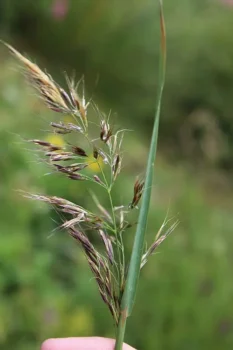
Bromus variegatus: The Mystery Grass That’s Hard to Pin Down
If you’ve stumbled across the name Bromus variegatus in your plant research, you’re not alone in feeling a bit puzzled. This particular grass species is something of an enigma in the botanical world, and there’s a good reason why you might be having trouble finding solid information about it.
What We Know (And Don’t Know)
Bromus variegatus belongs to the Bromus genus, a group of annual and perennial grasses commonly known as brome grasses. However, this specific species name doesn’t appear in most major botanical databases or field guides, which raises some red flags for gardeners and plant enthusiasts.
The name variegatus typically suggests a plant with variegated or multicolored foliage, but without verified specimens or documentation, we can’t confirm what this grass actually looks like or where it naturally occurs.
The Challenge with Mysterious Plant Names
Here’s where things get tricky for gardeners: Bromus variegatus might be:
- An extremely rare or regional species that hasn’t been widely studied
- An older scientific name that’s been reclassified
- A misidentification or confusion with another Bromus species
- A cultivar name that’s been mistakenly presented as a species
What This Means for Your Garden
Without reliable information about Bromus variegatus’s native status, growth habits, or environmental impact, it’s impossible to recommend whether you should plant it. This uncertainty is actually a valuable lesson in responsible gardening.
When encountering unfamiliar plant names, especially ones with limited documentation, it’s best to:
- Verify the plant’s identity through reputable botanical sources
- Consult with local native plant societies or extension services
- Choose well-documented native alternatives instead
Better Alternatives: Proven Native Grasses
Rather than gambling with a mysterious species, consider these well-documented native grasses that offer reliable benefits:
- Little bluestem (Schizachyrium scoparium)
- Buffalo grass (Bouteloua dactyloides)
- Prairie dropseed (Sporobolus heterolepis)
- Blue grama (Bouteloua gracilis)
The Bottom Line
While the mystery of Bromus variegatus is intriguing, responsible gardening means sticking with plants we can confidently identify and understand. If you’ve encountered this name somewhere specific, try to trace it back to its source – you might help solve a botanical puzzle! In the meantime, there are plenty of beautiful, well-documented native grasses that will serve your garden and local ecosystem much better.
Remember, the best native garden is built on solid information and reliable plant choices. When in doubt, go with the grasses we know and love!