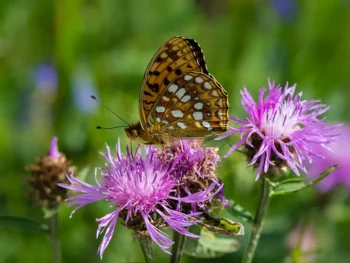
Brownray Knapweed: A Beautiful Bloom with a Cautionary Tale
If you’ve ever spotted clusters of purple-pink, thistle-like flowers brightening up roadsides and fields during summer, you’ve likely encountered brownray knapweed (Centaurea jacea). While this perennial wildflower might catch your eye with its cheerful blooms, there’s more to this European immigrant than meets the eye.
What is Brownray Knapweed?
Brownray knapweed is a hardy perennial forb – essentially a non-woody flowering plant that comes back year after year. Originally hailing from the grasslands and meadows of Europe, this adaptable species has made itself quite at home across North America. It produces lovely purple-pink flowers from summer through fall, creating the kind of colorful display that might tempt any gardener.
Where You’ll Find It
This enterprising plant has spread far and wide since its introduction to North America. You can now find brownray knapweed established across most of the United States and several Canadian provinces, from British Columbia to New Brunswick and everywhere in between. It’s particularly fond of upland areas – those drier spots away from wetlands – though it can occasionally pop up in moister soils too.
- Species observed
- No observations
The Plot Thickens: Why You Might Want to Think Twice
Here’s where our story takes a turn. While brownray knapweed might seem like an attractive, low-maintenance addition to your garden, it comes with some serious baggage. This species is classified as invasive in Wisconsin, where it has Restricted status – meaning it’s recognized as problematic enough to warrant official concern.
The issue isn’t just bureaucratic red tape. Brownray knapweed is a aggressive spreader that can outcompete native plants, disrupting local ecosystems and reducing biodiversity. Once it gets established, it’s notoriously difficult to remove, and it has a talent for colonizing new areas through prolific seed production.
Growing Conditions (If You Must Know)
For educational purposes, it’s worth understanding what makes this plant so successful. Brownray knapweed thrives in:
- Full sun locations
- Well-draining soils (though it’s not particularly picky)
- USDA hardiness zones 3-9
- Poor soils where other plants might struggle
- Drought conditions once established
Its ability to tolerate tough conditions is precisely what makes it such an effective colonizer – and such a management headache.
Better Alternatives for Your Garden
Instead of risking the environmental consequences of planting brownray knapweed, consider these native alternatives that offer similar aesthetic appeal:
- Wild bergamot (Monarda fistulosa) – Purple flowers that pollinators absolutely adore
- Purple coneflower (Echinacea purpurea) – Stunning purple blooms with excellent wildlife value
- New England aster (Symphyotrichum novae-angliae) – Late-season purple flowers perfect for fall color
- Blazingstar species (Liatris spp.) – Spiky purple flowers that add vertical interest
The Bottom Line
While brownray knapweed might seem like an easy, colorful choice for naturalized areas, its invasive tendencies make it a poor neighbor to native plants and ecosystems. Rather than introducing this problematic species to your landscape, opt for native alternatives that provide similar beauty without the ecological risks. Your local wildlife – and future gardeners – will thank you for making the responsible choice.
Remember, the most beautiful garden is one that works in harmony with the local environment rather than against it. There are plenty of native plants that can give you that wild, natural look without the invasive baggage!