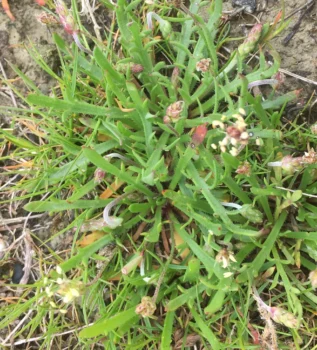
Buckhorn Plantain: A Hardy Ground Cover for Challenging Spots
Ever wondered about that small, feathery-leaved plant popping up in sandy soils and disturbed areas? Meet buckhorn plantain (Plantago coronopus), a resilient little character that’s made itself quite at home across North America, despite its Mediterranean origins.
What Is Buckhorn Plantain?
Buckhorn plantain is an annual or biennial forb that forms low-growing rosettes of deeply divided, almost feathery leaves. Unlike its broad-leaved plantain cousins, this species has a distinctly different appearance with its narrow, segmented foliage that gives it a delicate, almost fern-like quality.
This non-native species has established itself across much of North America, reproducing naturally in the wild from coast to coast. You’ll find it growing in British Columbia, Manitoba, New Brunswick, California, Massachusetts, New Jersey, New York, Oregon, Pennsylvania, Texas, and Washington.
- Species observed
- No observations
Should You Grow Buckhorn Plantain?
Here’s the thing about buckhorn plantain – it’s not going to win any beauty contests, but it has some interesting qualities that might make it worth considering for specific situations:
- Thrives in sandy, poor soils where other plants struggle
- Extremely drought tolerant once established
- Handles salt exposure well, making it suitable for coastal areas
- Requires virtually no maintenance
- Self-seeds readily for natural ground cover
Where Does It Fit in Your Landscape?
Buckhorn plantain isn’t destined for your prize flower border, but it can serve a purpose in naturalized areas, coastal gardens, or spots with challenging growing conditions. Think of it as nature’s answer to problem areas where you need something – anything – to grow and provide ground cover.
This plant has a flexible relationship with water, capable of growing in both wetland and non-wetland conditions depending on your region, though it typically prefers well-drained sites.
Growing Conditions and Care
If you’re considering adding buckhorn plantain to your landscape, here’s what it needs to thrive:
- Soil: Sandy, well-drained soils (actually prefers poor soil conditions)
- Sun: Full sun exposure
- Water: Minimal once established; very drought tolerant
- Hardiness: Zones 6-10
- Maintenance: Practically none required
Planting and Propagation
Buckhorn plantain is typically grown from seed, and honestly, it’s so good at self-seeding that you might not need to do much planting at all. If you do want to establish it in a specific area, scatter seeds in early spring or fall on prepared soil. The plant will handle the rest.
Wildlife and Pollinator Value
While buckhorn plantain won’t attract butterflies like a native wildflower meadow, it does have its place in the ecosystem. As a wind-pollinated plant, it doesn’t offer much direct value to pollinators, but it can provide habitat and food sources for some wildlife species.
Consider Native Alternatives
Since buckhorn plantain isn’t native to North America, you might want to consider indigenous alternatives that could provide similar benefits while supporting local ecosystems. Native plantains like American plantain (Plantago rugelii) or seaside plantain (Plantago maritima) in coastal areas could offer similar resilience with added ecological value.
The Bottom Line
Buckhorn plantain is one of those plants that falls into the useful but not spectacular category. If you have a difficult spot that needs covering and you appreciate low-maintenance plants, it might just be the solution you’re looking for. However, if you’re focused on supporting native wildlife and pollinators, you’ll probably want to look elsewhere for your ground cover needs.
Sometimes the most practical choice isn’t the most glamorous one – and that’s perfectly okay in the garden world!