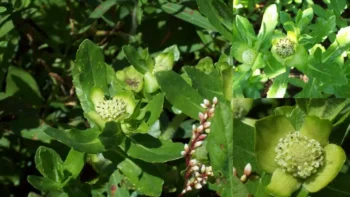
Buffalo-Spinach: A Water-Loving Ground Cover for Specialized Gardens
If you’re looking to add some green coverage to your water garden or wetland area, you might have come across Buffalo-Spinach (Enydra fluctuans). This aquatic perennial has found its way into Florida’s waterways and wetlands, where it thrives in consistently soggy conditions that would make most plants throw in the towel.
What is Buffalo-Spinach?
Buffalo-Spinach is a low-growing, herbaceous perennial that belongs to the forb family. Think of it as nature’s water carpet – it spreads along the ground (or water surface) without developing any woody stems. This plant is what botanists call an obligate wetland species, which is a fancy way of saying it absolutely must have its feet wet to survive.
Where Does It Come From?
Originally hailing from tropical regions of Asia and Africa, Buffalo-Spinach has established itself as a non-native resident in Florida. It’s one of those plants that decided the Sunshine State’s warm, wet conditions were perfect for setting up shop permanently.
- Species observed
- No observations
Should You Grow Buffalo-Spinach?
The answer depends entirely on what kind of garden situation you’re dealing with. Here are some things to consider:
The Good
- Excellent ground cover for water gardens and bog areas
- Produces small white flowers that attract pollinators like flies and small bees
- Thrives in conditions where most other plants would struggle
- Low-maintenance once established in the right environment
The Considerations
- Requires constantly wet conditions – not suitable for typical garden beds
- Can spread aggressively in ideal conditions
- Limited to USDA hardiness zones 9-11
- As a non-native species, it won’t support local wildlife ecosystems as effectively as native alternatives
Native Alternatives to Consider
Before committing to Buffalo-Spinach, you might want to explore native Florida wetland plants that can provide similar ground cover benefits while supporting local wildlife. Native alternatives often integrate better with existing ecosystems and require less management over time.
Growing Buffalo-Spinach Successfully
If you decide Buffalo-Spinach fits your specific gardening needs, here’s how to keep it happy:
Ideal Growing Conditions
- Light: Full sun to partial shade
- Water: Constantly moist soil or shallow standing water
- Climate: Warm, humid conditions (zones 9-11)
- Soil: Any soil type, as long as it stays wet
Planting and Care Tips
- Plant in spring when temperatures consistently stay above 60°F
- Space plants 12-18 inches apart if you want quicker coverage
- Ensure water levels never drop below the root zone
- Monitor spread and trim back if it starts taking over more space than intended
- No fertilizer needed – wetland conditions typically provide adequate nutrients
The Bottom Line
Buffalo-Spinach fills a very specific niche in the gardening world. If you have a water feature, bog garden, or wetland restoration project in a warm climate, it can provide reliable ground coverage and modest pollinator support. However, its aggressive spreading habit and non-native status mean it’s worth exploring native alternatives first. When in doubt, consult with local native plant societies or extension offices – they’ll have the best insights into what works well in your specific area while supporting local ecosystems.
Remember, successful gardening often comes down to matching the right plant with the right conditions. Buffalo-Spinach might be perfect for your waterlogged corner, but it’ll be absolutely miserable in a typical flower bed!