Non-native Plants

Buffelgrass

Pennisetum ciliare

USDA symbol: PECI

perennial grass

Hawaii: non-native, naturalized
Lower 48 states: non-native, naturalized
Pacific Basin excluding Hawaii: non-native, naturalized
Puerto Rico: non-native, naturalized
U.S. Virgin Islands: non-native, naturalized

If you’re shopping for drought-tolerant grasses, you might come across buffelgrass (Pennisetum ciliare, also known as buffel grass). While this perennial grass might seem like an attractive option for water-wise landscaping, there’s more to this story than meets the eye. Let’s dive into why this particular grass has become such ...

Buffelgrass: Why This Drought-Tolerant Grass Isn’t Worth the Risk

If you’re shopping for drought-tolerant grasses, you might come across buffelgrass (Pennisetum ciliare, also known as buffel grass). While this perennial grass might seem like an attractive option for water-wise landscaping, there’s more to this story than meets the eye. Let’s dive into why this particular grass has become such a controversial player in American landscapes.

What Exactly Is Buffelgrass?

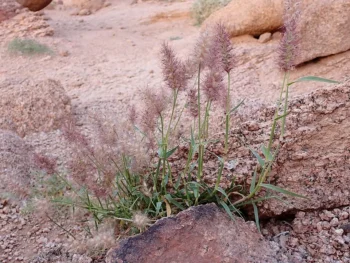
Buffelgrass is a clumping perennial grass that can grow up to 3 feet tall with a rapid growth rate. Originally hailing from Africa, Asia, and southern Europe, this hardy grass produces feathery, bottlebrush-like seed heads that bloom in mid-summer with yellow flowers. The foliage starts green and can turn golden-tan when the plant goes dormant, giving it a somewhat attractive appearance that might catch a gardener’s eye.

Where You’ll Find Buffelgrass

This non-native grass has established itself across multiple states including Arizona, California, Florida, Hawaii, Louisiana, Missouri, New Mexico, New York, Oklahoma, Texas, and several U.S. territories including Guam, Puerto Rico, and the Virgin Islands. It’s particularly problematic in the southwestern United States, where it has escaped cultivation and now reproduces spontaneously in the wild.

  • Species observed
  • No observations

The Problem with Buffelgrass

Here’s where things get tricky: buffelgrass is highly invasive in many regions, especially in desert ecosystems of the American Southwest. While it might seem like the perfect drought-tolerant solution for your landscape, this grass has become an ecological nightmare in places like Arizona’s Sonoran Desert.

The grass spreads both by seed (and boy, does it produce seeds – up to 260,000 seeds per pound!) and through slow vegetative spread. Once established, it can quickly dominate native plant communities and create fire hazards in desert areas that historically didn’t experience frequent fires.

Growing Conditions (If You Must Know)

Buffelgrass is incredibly adaptable, which is part of what makes it so problematic. It thrives in:

  • USDA hardiness zones 8-11
  • Drought conditions (high drought tolerance)
  • Various soil types from coarse to fine textures
  • pH levels between 6.0 and 8.5
  • Areas with minimal precipitation (14-35 inches annually)
  • Full sun locations (shade intolerant)

The grass is an obligate upland plant in most regions, meaning it almost never occurs in wetlands, though it shows some tolerance for wetland conditions in Hawaii.

Why You Should Skip This Grass

Despite its impressive drought tolerance and low maintenance requirements, we strongly recommend against planting buffelgrass. Here’s why:

  • It’s highly invasive and can escape your garden
  • It disrupts native ecosystems
  • It increases fire risk in desert areas
  • It provides limited wildlife and pollinator benefits
  • Once established, it can be extremely difficult to remove

Better Native Alternatives

Instead of risking ecological damage with buffelgrass, consider these native alternatives based on your region:

  • For the Southwest: Blue grama (Bouteloua gracilis), buffalo grass (Poaceae dactyloides), or desert wildrye (Leymus condensatus)
  • For Mediterranean climates: Purple needlegrass (Stipa pulchra) or California oatgrass (Danthonia californica)
  • For the Southeast: Little bluestem (Schizachyrium scoparium) or switchgrass (Panicum virgatum)

The Bottom Line

While buffelgrass might seem like an easy solution for drought-tolerant landscaping, the environmental risks far outweigh any potential benefits. This is one plant that’s better left out of your garden entirely. Stick with native grasses that provide the same drought tolerance without the ecological baggage – your local wildlife and future generations will thank you for it.

Remember, responsible gardening means considering not just what works for your landscape, but what works for your entire ecosystem. In this case, buffelgrass simply doesn’t make the cut.

Pennisetum ciliare is also known as...

Often we refer to plants by their common names. When shopping for plants the scientific name is the best way to positively identify the plant species you desire. But some plants have more than one name! While it doesn't happen often, nurseries might display one name while you're searching for another. Pennisetum ciliare is also known as:

Cenchrus ciliaris | USDA symbol: CECI
Pennisetum ciliare Link var. ciliare | USDA symbol: PECIC

Why do some plants have more than one name? Over time plant species may be renamed for a few reasons:

  1. Botanists in different regions named the same plant without knowing it had already been classified.
  2. A species was reclassified after scientific advances in, for example, DNA analysis.
  3. Slight variations within a species are sometimes mistakenly identified as entirely new species.

Wetland Status

The rule of seasoned gardeners and landscapers is to choose the "right plant for the right place" — matching plants to their ideal growing conditions, so they'll thrive with less care and fewer inputs. But the simplicity of this catchphrase conceals how tricky plant selection can be if you don't have the right information. While tags on nursery plants list watering requirements, there's more to the story.

Knowing a plant's wetland status can simplify the process by revealing the interaction between plants, water, and soil. You might be surprised to learn that popular landscape plants are wetland species! And what may be a wetland plant in one area, in another it might thrive in drier conditions. The table below gives insight into the preferred growing conditions of this plant throughout its geographical distribution.

Region
Preferred Habitat

Arid West (AZ, CA, CO, ID, MT, NV, NM, OR, TX, UT, WA, WY)

Obligate Upland

Atlantic and Gulf Coastal Plain (AL, AR, DC, DE, FL, GA, IL, KY, LA, MD, MS, MO, NC, NJ, OK, PA, SC, TN, TX, VA)

Obligate Upland

Caribbean (PR, VI)

Obligate Upland

Eastern Mountains and Piedmont (AL, AR, DC, DE, GA, IL, IN, KS, KY, MD, MO, NC, NJ, NY, OH, OK, PA, SC, TN, VA, WV)

Obligate Upland

Great Plains (CO, KS, MN, MT, NE, NM, ND, OK, SD, TX, WY)

Obligate Upland

Hawaii ()

Facultative Upland

Midwest (IL, IN, IA, KS, KY, MI, MN, MO, NE, ND, OK, OH, SD, WI)

Obligate Upland

Northcentral & Northeast ()

Obligate Upland

Western Mountains, Valleys, and Coast (AZ, CA, CO, ID, MT, NV, NM, OR, SD, UT, WA, WY)

Obligate Upland
Wetland Glossary
Obligate Wetland
Facultative Wetland
Facultative
Facultative Upland
Obligate Upland
Almost always occurs in wetlands
Usually occurs in wetlands but may occur in non-wetlands
Can occur in wetlands and non-wetlands
Usually occurs in non-wetlands but may occur in wetlands
Almost never occurs in wetlands

Classification

Group: Monocot
Kingdom: Plantae - Plants
Subkingdom: Tracheobionta - Vascular plants
Superdivision: Spermatophyta - Seed plants
Division: Magnoliophyta - Flowering plants
Class: Liliopsida - Monocotyledons
Subclass: Commelinidae
Order: Cyperales
Family: Poaceae Barnhart - Grass family
Genus: Pennisetum Rich. ex Pers. - fountaingrass

Species: Pennisetum ciliare (L.) Link - buffelgrass

Plant data source: USDA, NRCS 2025. The PLANTS Database. https://plants.usda.gov,. 2/25/2025. National Plant Data Team, Greensboro, NC USA