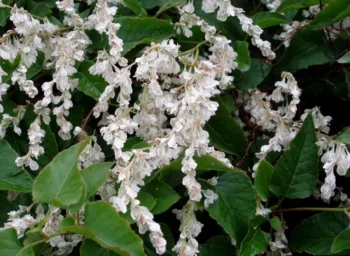
Bukhara Fleeceflower: The Fast-Growing Vine That’s Both Blessing and Challenge
Looking for a vine that can cover an unsightly fence or provide quick privacy screening? Bukhara fleeceflower (Polygonum baldschuanicum) might catch your attention with its rapid growth and cascading flowers. But before you plant this vigorous climber, let’s explore what makes this perennial vine tick and whether it’s the right choice for your garden.
What Is Bukhara Fleeceflower?
Bukhara fleeceflower is a perennial twining vine that originally hails from Central Asia. You might also encounter it under several other scientific names, including Fallopia baldschuanica or Polygonum aubertii – botanists have shuffled this plant around quite a bit over the years!
This climbing plant features heart-shaped leaves and produces masses of small, fragrant white to pale pink flowers in late summer and fall. The blooms create a frothy, cloud-like appearance that gives the plant its fleeceflower common name.
Where You’ll Find It Growing
While not native to North America, Bukhara fleeceflower has established itself across many states, including California, Colorado, Maryland, Massachusetts, Michigan, New Jersey, New Mexico, New York, Oregon, Pennsylvania, Utah, Virginia, and Washington. As a non-native species, it reproduces on its own in the wild and tends to persist without human intervention.
- Species observed
- No observations
The Good, The Bad, and The Vigorous
Here’s where things get interesting with Bukhara fleeceflower – it’s both a blessing and a potential headache, depending on your gardening goals.
Why Gardeners Choose It:
- Lightning-fast growth provides quick coverage and privacy
- Attractive late-season flowers when many plants are winding down
- Fragrant blooms attract bees and butterflies
- Tolerates various growing conditions once established
- Hardy in USDA zones 4-8
- Drought tolerant after the first year
Potential Challenges:
- Extremely vigorous growth can overwhelm other plants
- May require frequent pruning to keep in bounds
- Can spread beyond intended areas
- Non-native status means it doesn’t support native wildlife as effectively as native alternatives
Growing Conditions and Care
If you decide to grow Bukhara fleeceflower, it’s refreshingly low-maintenance once established. This adaptable vine thrives in full sun to partial shade and isn’t particularly fussy about soil type. It handles drought well after its first growing season, making it suitable for areas with challenging conditions.
The key to success – and sanity – is providing sturdy support structures from the start. This vine means business when it comes to climbing and spreading!
Planting and Care Tips
- Plant in spring after the last frost
- Install robust trellises, fences, or other support structures before planting
- Space plants 6-8 feet apart if using multiple specimens
- Water regularly the first year to establish roots
- Prune heavily in late winter or early spring to control size
- Monitor for spread and remove unwanted shoots promptly
Native Alternatives Worth Considering
While Bukhara fleeceflower can solve your quick-coverage needs, consider these native alternatives that provide similar benefits while supporting local ecosystems:
- American groundnut (Apios americana) for edible flowers and wildlife value
- Virgin’s bower (Clematis virginiana) for late-season white flowers
- Wild grape species (Vitis riparia or V. labrusca) for fruit and fall color
- American pipe vine (Aristolochia serpentaria) for unique flowers and butterfly larvae support
The Bottom Line
Bukhara fleeceflower delivers on its promise of rapid coverage and attractive late-season blooms. However, its vigorous nature and non-native status make it a plant that requires careful consideration. If you choose to grow it, be prepared for regular maintenance and monitor its spread carefully.
For gardeners seeking quick results in challenging spots, it can be a useful tool – just think of it as a high-maintenance friend who needs clear boundaries. For those prioritizing native plants and wildlife support, the native alternatives mentioned above might better serve your long-term gardening goals while providing similar aesthetic benefits.
Whatever you choose, remember that the best garden plants are ones that match both your site conditions and your maintenance preferences!