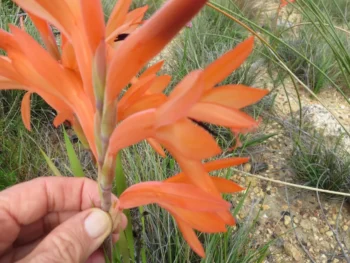
Bulbil Bugle-Lily: A Colorful South African Beauty for Your Garden
Meet the bulbil bugle-lily (Watsonia meriana), a striking perennial that brings a splash of warm color to gardens with its vibrant orange-coral trumpet flowers. This South African native has found a comfortable home in California’s Mediterranean climate, where it’s become a popular choice for drought-conscious gardeners looking to add some exotic flair to their landscapes.
What Makes the Bulbil Bugle-Lily Special?
The bulbil bugle-lily gets its quirky name from its unique reproductive habit – it produces small bulbils (tiny plantlets) along its flower stems, which eventually drop and grow into new plants. Pretty clever, right? These orange to coral-colored flowers bloom in dense, showy spikes that can reach 3-4 feet tall, creating a dramatic vertical element in the garden. The sword-like foliage adds structural interest even when the plant isn’t flowering.
Where Does It Come From?
Originally from South Africa’s Western Cape region, Watsonia meriana is a non-native species that has established itself in California. It reproduces on its own in the wild and has adapted well to similar Mediterranean climates. Currently, it’s found growing in California, where it thrives in the state’s mild, wet winters and dry summers.
- Species observed
- No observations
Garden Appeal and Design Uses
This eye-catching perennial works beautifully in several garden settings:
- Mediterranean-style gardens where its drought tolerance shines
- Coastal landscapes that benefit from its salt tolerance
- Perennial borders where its height adds vertical interest
- Naturalized areas for a more relaxed, wild look
The bulbil bugle-lily typically grows 2-4 feet tall and spreads about 1-2 feet wide, making it perfect for middle to back-of-border plantings. Its flowers appear from late spring through early summer, providing color when many spring bulbs are fading.
Growing Conditions and Care
If you’re considering adding bulbil bugle-lily to your garden, here’s what it needs to thrive:
Climate: Hardy in USDA zones 8-10, though it might survive in zone 7 with winter protection
Light: Full sun is best for maximum flowering
Soil: Well-draining soil is essential – sandy or loamy soils work great. It won’t tolerate waterlogged conditions
Water: Drought-tolerant once established, but benefits from regular water during the growing season. Allow it to go dormant and dry out in summer
Planting and Maintenance Tips
Plant bulbs in fall, spacing them 4-6 inches apart and about 4 inches deep. During the growing season, provide moderate water, but reduce watering significantly during summer dormancy. Every 3-4 years, divide overcrowded clumps to maintain vigor and spread your collection.
Wildlife and Pollinator Benefits
The tubular flowers are magnets for bees and butterflies, making this plant a valuable addition to pollinator gardens. The nectar-rich blooms provide an important food source during their flowering period.
Should You Plant It?
While the bulbil bugle-lily can be a beautiful addition to appropriate gardens, consider your local ecosystem first. Since it’s non-native and can self-seed readily, you might want to explore native alternatives that provide similar benefits. California native options like penstemon species or native salvias can offer comparable color and pollinator benefits while supporting local wildlife more effectively.
If you do choose to grow bulbil bugle-lily, be mindful of its spreading habit and consider removing seed heads to prevent unwanted spread into natural areas. With proper care and consideration, it can be a lovely addition to cultivated garden spaces, especially those designed with Mediterranean or drought-tolerant themes in mind.