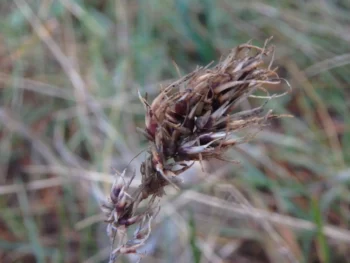
Bulbous Bluegrass: What Every Gardener Should Know About This Non-Native Grass
If you’ve ever noticed small, tufted grass growing in disturbed areas of your yard or along roadsides, you might have encountered bulbous bluegrass (Poa bulbosa). This perennial grass has quite the story to tell – and as a gardener, it’s worth understanding what you’re dealing with when you spot it in your landscape.
The Basics: What Is Bulbous Bluegrass?
Bulbous bluegrass is a small perennial grass that’s actually not native to North America. Originally from the Mediterranean region, Europe, and parts of Asia, this hardy little grass has made itself at home across much of the United States. You’ll recognize it by its bunch-style growth habit and its relatively modest stature – it typically reaches about 1.5 feet in height.
The name bulbous comes from the plant’s interesting reproductive strategy. Along with producing seeds, it can form small bulb-like structures called bulbils that help it spread and establish new plants.
Where You’ll Find It
This adaptable grass has established itself in an impressive 41 states, stretching from coast to coast. You’ll find bulbous bluegrass in states as diverse as Arizona and Maine, California and Florida. It’s particularly fond of disturbed soils and can pop up in waste areas, along roadsides, and in overgrazed pastures.
- Species observed
- No observations
Growing Characteristics
Bulbous bluegrass is what you might call a survivor. Here are its key growing traits:
- Growth habit: Forms small bunches rather than spreading into a solid turf
- Active growing season: Spring and fall
- Height: Up to 1.5 feet tall
- Growth rate: Moderate
- Flowers: Small, inconspicuous yellow blooms in late spring
- Foliage: Fine-textured, green leaves
Growing Conditions and Hardiness
This grass is remarkably adaptable to different conditions, which explains its widespread distribution. Bulbous bluegrass thrives in USDA hardiness zones 4-9 and can handle:
- Soil types: Adapts to coarse, medium, and fine-textured soils
- pH range: 5.0 to 7.2
- Precipitation: 12 to 40 inches annually
- Drought tolerance: Moderate
- Cold tolerance: Can withstand temperatures as low as -33°F
- Shade tolerance: Intermediate – can handle some shade but prefers sun
Across all regions of the United States, bulbous bluegrass has a facultative upland wetland status, meaning it usually grows in non-wetland areas but can occasionally tolerate wetland conditions.
Should You Plant Bulbous Bluegrass?
Here’s where things get interesting. While bulbous bluegrass isn’t considered invasive or noxious, it’s also not a plant that most gardeners intentionally cultivate. Its aesthetic appeal is quite limited – think of it more as a functional grass that fills empty spaces rather than a showstopper for your landscape design.
If you’re looking to establish grass in difficult, disturbed areas where other plants struggle, bulbous bluegrass might naturally establish itself without any help from you. However, for most gardening purposes, you’ll likely want to consider native alternatives that provide better wildlife benefits and aesthetic appeal.
Native Alternatives to Consider
Instead of planting bulbous bluegrass, consider these native grass options that will better support local ecosystems:
- Little bluestem (Schizachyrium scoparium) – beautiful fall color and excellent wildlife habitat
- Buffalo grass (Poëa dactyloides) – drought-tolerant and low-maintenance
- Blue grama (Bouteloua gracilis) – attractive seed heads and great for dry areas
- Prairie dropseed (Sporobolus heterolepis) – fragrant and elegant
Wildlife and Pollinator Benefits
As a wind-pollinated grass with inconspicuous flowers, bulbous bluegrass offers minimal benefits to pollinators like bees and butterflies. Its wildlife benefits are also limited compared to native grass species that have evolved alongside local wildlife populations.
Management Tips
If bulbous bluegrass appears in your landscape, you don’t need to panic – it’s not aggressively invasive. However, if you prefer to maintain a native plant garden, you can:
- Hand-pull small populations in spring when the soil is moist
- Improve soil conditions and plant competitive native species
- Maintain healthy, dense plantings of desirable species to prevent establishment
The Bottom Line
Bulbous bluegrass is one of those plants that’s neither friend nor foe – it’s simply there, quietly doing its thing in disturbed areas across the country. While it won’t harm your garden, it won’t particularly enhance it either. For most gardeners, focusing on native grass species will provide better aesthetic results, superior wildlife habitat, and a stronger connection to your local ecosystem.
Understanding plants like bulbous bluegrass helps us make informed decisions about our landscapes and appreciate the complex plant communities that surround us, even if we choose not to actively cultivate them.