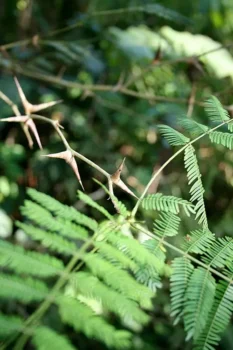
Bull Horn Acacia: The Fascinating Tree with a Built-in Security System
Meet the bull horn acacia (Vachellia collinsii), a tree that’s basically nature’s version of a fortress with live-in guards. This fascinating species has evolved one of the most remarkable partnerships in the plant kingdom, making it a conversation starter that’s sure to intrigue any garden visitor.
What Makes Bull Horn Acacia Special?
The bull horn acacia gets its common name from its most distinctive feature: large, hollow thorns that look remarkably like tiny bull horns. But here’s where it gets really interesting – these aren’t just for show. In its native habitat, these thorns house colonies of aggressive ants that act as the tree’s personal bodyguards, attacking anything that tries to nibble on the leaves.
Also known by its scientific name Vachellia collinsii (formerly classified as Acacia collinsii), this species represents one of nature’s most successful mutually beneficial relationships.
Where Does It Come From?
This remarkable tree is native to Central America, particularly thriving in Costa Rica, Nicaragua, and parts of Mexico. In these tropical regions, it’s a common sight in dry forests and savannas, where its drought tolerance and ant partners help it survive in challenging conditions.
Should You Grow Bull Horn Acacia?
Here’s the thing about bull horn acacia – it’s absolutely fascinating, but it’s definitely not for everyone or every garden. Let’s break down the pros and cons:
The Good Stuff
- Incredibly unique conversation piece
- Beautiful feathery foliage and bright yellow, puffy flower clusters
- Extremely drought tolerant once established
- Educational value for learning about plant-animal relationships
- Attracts pollinators when in bloom
The Challenges
- Only suitable for USDA zones 10-12 (think southern Florida, Hawaii, or southern California)
- Those thorns are no joke – they’re sharp and can cause injury
- Without its ant partners, it may struggle and become more susceptible to pests
- Can grow 15-25 feet tall and wide, needing adequate space
Growing Bull Horn Acacia Successfully
If you’re in the right climate and ready for the challenge, here’s how to give your bull horn acacia the best shot at success:
Location and Soil
Choose a spot with full sun – this tree loves bright, direct sunlight. The soil should drain well; soggy conditions are a no-go. Sandy or rocky soils actually work great, mimicking its natural habitat.
Watering Needs
Young trees need regular watering to get established, but once mature, bull horn acacia is impressively drought tolerant. Water deeply but infrequently, allowing the soil to dry between waterings.
Maintenance and Care
Pruning should be done with extreme caution due to those formidable thorns – heavy gloves and long sleeves are essential. The tree generally maintains a nice shape on its own, so minimal pruning is usually needed.
Climate Considerations
This is perhaps the biggest limiting factor for most gardeners. Bull horn acacia is strictly tropical to subtropical, thriving in USDA hardiness zones 10-12. It cannot tolerate frost or extended cold periods, making it unsuitable for most of the continental United States.
Native Alternatives to Consider
If you’re drawn to the unique characteristics of bull horn acacia but live outside its suitable climate range, consider these native alternatives that offer their own special appeal:
- For thorny, drought-tolerant trees: Honey mesquite (Prosopis glandulosa) in the Southwest
- For interesting seed pods and flowers: Redbud (Cercis canadensis) in temperate zones
- For wildlife value and unique form: Hawthorn species (Crataegus spp.) in various regions
The Bottom Line
Bull horn acacia is undeniably fascinating – a living testament to the incredible partnerships that evolve in nature. However, it’s a specialty plant that requires specific tropical conditions and careful handling. If you’re in zones 10-12, have space for a medium-sized tree, and want something truly unique, it could be an exciting addition to your landscape.
For gardeners in cooler climates or those seeking lower-maintenance options, exploring native alternatives will likely provide better long-term success while supporting local ecosystems. Remember, the most beautiful garden is one where plants thrive naturally in harmony with their environment.