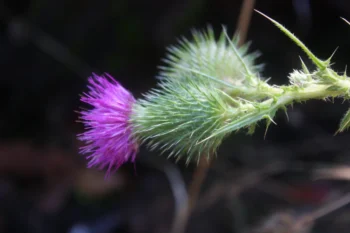
Bull Thistle: Why This Spiny Invader Doesn’t Belong in Your Garden
If you’ve spotted a tall, spiny plant with purple-pink thistle flowers taking over vacant lots or roadsides, you’ve likely encountered bull thistle (Cirsium vulgare). While these architectural plants might catch your eye with their dramatic appearance, they’re definitely not something you want to welcome into your garden.
What Is Bull Thistle?
Bull thistle is a biennial forb, meaning it completes its life cycle over two years. In its first year, it forms a low rosette of deeply lobed, spiny leaves. Come year two, it sends up tall flowering stems topped with those characteristic purple-pink blooms. Don’t let the pretty flowers fool you though – this plant is all about survival and spread.
The Invasion Problem
Here’s the thing about bull thistle: it’s not native to North America. Originally from Europe and Asia, this aggressive colonizer has spread across virtually the entire continent. You’ll find it established in:
- All 50 US states plus Washington D.C.
- Every Canadian province and territory
- Even Alaska and Hawaii haven’t escaped its reach
In Alabama, bull thistle has earned a spot on the invasive species Watch List, and for good reason.
- Species observed
- No observations
Why You Shouldn’t Plant Bull Thistle
While bull thistle flowers do attract pollinators like bees and butterflies, planting this species comes with serious drawbacks:
- Aggressive spreader: Each plant can produce thousands of wind-dispersed seeds
- Crowds out natives: It outcompetes indigenous plants that local wildlife depends on
- Difficult to control: Those deep taproots make removal challenging
- Spreads rapidly: Thrives in disturbed soils and disturbed areas
Growing Conditions (So You Can Spot and Remove It)
Bull thistle is frustratingly adaptable, which explains its successful invasion. It thrives in:
- USDA hardiness zones 3-9
- Full sun locations
- Various soil types, especially disturbed or poor soils
- Both dry and moderately moist conditions (though it prefers upland areas)
The plant typically grows 3-6 feet tall and spreads about 2-3 feet wide at maturity.
Better Native Alternatives
Instead of bull thistle, consider these native options that provide similar benefits without the invasive baggage:
- Purple prairie clover (Dalea purpurea): Purple flowers that pollinators love
- Wild bergamot (Monarda fistulosa): Lavender blooms and aromatic foliage
- New England aster (Symphyotrichum novae-angliae): Purple fall flowers
- Native thistles: Such as field thistle (Cirsium discolor) where appropriate
Identification and Management
If you discover bull thistle on your property, here’s how to deal with it:
- First-year plants: Hand-pull rosettes when soil is moist, getting the entire taproot
- Second-year plants: Cut flowering stems before seeds develop, then dig out the root system
- Prevention: Maintain healthy native plant communities that can outcompete invasives
- Timing: Best removal time is late fall or early spring
The Bottom Line
While bull thistle might have a certain wild beauty, it’s simply not worth the ecological cost. This European import disrupts native ecosystems and creates headaches for land managers across North America. Instead of planting bull thistle, choose native alternatives that support local wildlife and won’t take over your neighborhood. Your local pollinators – and your neighbors – will thank you for making the responsible choice.
Remember: the best garden is one that works with nature, not against it. Save your garden space for plants that truly belong in your local ecosystem.