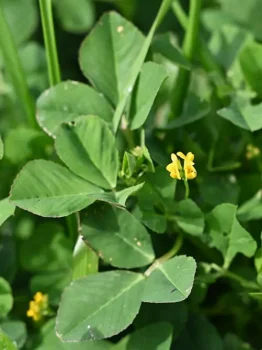
Burclover: The Humble Ground-Hugger That Divides Gardeners
Meet burclover (Medicago polymorpha), a plant that’s about as controversial as a dandelion at a garden party. Also known as bur clover or burr medic, this low-growing annual has quietly made itself at home across North America, despite originally hailing from the Mediterranean region. Whether you see it as a useful ground cover or an unwelcome guest depends entirely on your gardening goals.
What Exactly Is Burclover?
Burclover is a non-native forb that’s mastered the art of staying under the radar—literally. This prostrate plant hugs the ground, rarely exceeding 1.3 feet in height, and spreads in a single crown formation. It’s an annual plant with a short lifespan, but don’t let that fool you into thinking it’s fragile. This little survivor has established itself across an impressive range, from Alaska to Hawaii and everywhere in between.
The plant produces small, inconspicuous yellow flowers during winter months, followed by characteristic spiny seed pods that give it the bur in its name. Its dark green foliage has a fine texture and porous quality, creating a delicate appearance that belies its hardy nature.
Where You’ll Find Burclover
Burclover has become a true cosmopolitan, establishing populations across most U.S. states and Canadian provinces. From the sunny fields of California to the coastal regions of Maine, this adaptable plant has found ways to thrive in diverse climates and conditions.
- Species observed
- No observations
The Great Burclover Debate: Friend or Foe?
Here’s where things get interesting. Burclover sits in that gray area between helpful and problematic, making it a plant that gardeners either embrace or ignore.
The Case for Burclover:
- Nitrogen fixing powerhouse: Like other legumes, burclover has a high nitrogen fixation ability, naturally enriching soil
- Wildlife food source: While not a primary food source, it does provide sustenance for large animals (2-5% of their diet)
- Drought resilience: Once established, it requires minimal water
- Pollinator support: Small flowers offer nectar for bees and other tiny pollinators
- Easy propagation: Self-seeds readily with high seed production
The Case Against Burclover:
- Non-native status: Not part of native ecosystems
- Limited aesthetic appeal: Flowers are small and inconspicuous
- Spiny seed pods: Can be problematic in areas with foot traffic
- Aggressive self-seeding: May spread beyond intended areas
Growing Conditions and Care
If you decide to work with burclover, you’ll find it refreshingly undemanding. This plant thrives in USDA hardiness zones 6-10 and prefers:
- Soil: Adapts to fine and medium-textured soils with pH between 5.9 and 8.2
- Moisture: Medium water needs, though drought-tolerant once established
- Sunlight: Full sun (shade intolerant)
- Climate: Needs at least 100 frost-free days and cold stratification for seeds
The plant has an active growth period during fall, winter, and spring—making it particularly valuable for soil coverage during cooler months when many other plants are dormant.
Wetland Considerations
Burclover typically prefers upland conditions across most regions, though it shows facultative upland status in most areas (meaning it usually grows in non-wetland areas but can tolerate some moisture). In Hawaii, it’s classified as obligate upland, almost never occurring in wetlands.
Planting and Propagation
Growing burclover is straightforward—perhaps too straightforward for some gardeners’ comfort:
- Seeding: The primary propagation method with approximately 170,400 seeds per pound
- Timing: Plant in fall for winter and spring growth
- Spacing: Seeds spread at a moderate rate
- Establishment: Medium seedling vigor with moderate growth rate
Native Alternatives to Consider
While burclover isn’t considered invasive, supporting native ecosystems is always beneficial. Consider these native nitrogen-fixing alternatives:
- Wild lupine (Lupinus species) for dramatic flower spikes
- Native clovers like red clover in suitable regions
- Vetch species native to your area
- Native leguminous shrubs for larger spaces
The Bottom Line
Burclover occupies an interesting niche in the gardening world. It’s not going to win any beauty contests, but it serves functional purposes like nitrogen fixation and ground coverage. For agricultural or naturalized settings, it can be genuinely useful. For ornamental gardens, you’ll likely find more attractive native alternatives.
If you’re dealing with existing burclover populations, there’s no urgent need to remove them—they’re not considered invasive or noxious. However, for new plantings, consider whether native alternatives might better serve both your garden goals and local ecosystems.
Sometimes the most humble plants teach us the most about working with nature rather than against it. Burclover may not be flashy, but it’s certainly earned its place in the complex tapestry of North American plant communities.