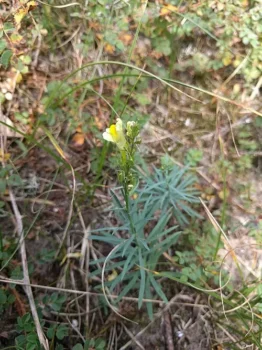
Butter and Eggs: A Beautiful But Problematic Wildflower
With its cheerful yellow and orange blooms that look like tiny snapdragons, butter and eggs (Linaria vulgaris) might seem like the perfect addition to your wildflower garden. However, this European native comes with some serious baggage that every gardener should know about before considering it for their landscape.
What is Butter and Eggs?
Butter and eggs is a perennial forb – essentially a non-woody flowering plant that comes back year after year. Also known by its scientific name Linaria vulgaris, this plant produces distinctive two-toned flowers that earned it the whimsical common name. The bright yellow petals with orange centers really do resemble the breakfast combination that inspired its moniker.
This herbaceous perennial typically grows 1-3 feet tall and can spread indefinitely once established. The narrow, blue-green leaves alternate along upright stems, creating a somewhat weedy appearance even when not in bloom.
Native Status and Distribution
Here’s where things get complicated: butter and eggs is not native to North America. Originally from Europe and Asia, this plant has been introduced across virtually the entire continent and now grows wild in Alaska, all Canadian provinces and territories, and all U.S. states. It reproduces spontaneously without human help and tends to persist wherever it establishes.
- Species observed
- No observations
Why You Should Think Twice Before Planting
While butter and eggs might look innocent enough, it’s actually classified as a restricted noxious weed in Alaska, and it’s considered invasive in many other regions. This plant spreads aggressively through both underground rhizomes and prolific seed production, making it extremely difficult to control once established.
The plant’s adaptability is both its strength and the source of the problem. It thrives in poor soils, tolerates drought, and grows well in full sun to partial shade across USDA hardiness zones 3-9. These qualities that might seem appealing to a gardener also make it a formidable invasive species that can outcompete native plants.
Aesthetic Appeal and Garden Role
From a purely aesthetic standpoint, butter and eggs does have its charms. The bright yellow flowers with orange throats bloom from summer through fall, providing a long season of color. The flowers attract bees and butterflies, adding some pollinator value to the landscape. In informal wildflower meadows or naturalized areas, it can create impressive displays.
However, its aggressive spreading habit means it won’t stay where you plant it. What starts as a small patch can quickly become a monoculture that crowds out more desirable plants.
Better Native Alternatives
Instead of risking the ecological problems that come with butter and eggs, consider these native alternatives that offer similar aesthetic benefits without the invasive behavior:
- Wild columbine (Aquilegia canadensis) – offers unique spurred flowers in red and yellow
- Partridge pea (Chamaecrista fasciculata) – bright yellow flowers that attract pollinators
- Wild bergamot (Monarda fistulosa) – excellent for pollinators with purple flowers
- Black-eyed Susan (Rudbeckia species) – cheerful yellow daisy-like flowers
- Native goldenrod species – provide late-season yellow blooms
If You Already Have It
If butter and eggs has already established itself in your landscape, removing it requires persistence. The plant’s extensive rhizome system means that simply cutting it back won’t eliminate it. You’ll need to dig up the entire root system, which can be quite extensive. For large infestations, you may need to consider more intensive management strategies and should consult with local extension services or invasive species management programs.
The Bottom Line
While butter and eggs certainly has visual appeal and can attract pollinators, its invasive nature and classification as a noxious weed in some areas make it a poor choice for responsible gardeners. The risk of it spreading beyond your intended planting area and potentially impacting local ecosystems simply isn’t worth the temporary beauty it might provide.
Instead, choose native alternatives that will provide similar aesthetic benefits while supporting local wildlife and maintaining ecological balance. Your local ecosystem – and your fellow gardeners – will thank you for making the more responsible choice.