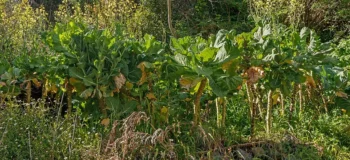
Growing Cabbage (Brassica oleracea): A Non-Native Vegetable with Garden Potential
When most gardeners think of cabbage, they picture neat rows in the vegetable patch or those massive heads at the grocery store. But the wild ancestor of all our beloved brassicas—from broccoli to kale to Brussels sprouts—has its own story to tell in the garden world.
What Exactly Is Brassica oleracea?
Brassica oleracea, commonly known as cabbage or wild cabbage, is the botanical foundation for an entire family of vegetables we know and love. This perennial plant is the original species from which centuries of selective breeding gave us everything from cauliflower to collard greens. In its wild form, it looks quite different from the tight-headed cabbages we’re familiar with—more like a loose, leafy plant with distinctive blue-green, wavy-edged foliage.
Native Status and Geographic Distribution
Here’s where things get interesting from a native gardening perspective: Brassica oleracea is not native to North America. Originally from the Mediterranean region and Atlantic coasts of Europe, this species has been introduced across much of North America, where it now grows wild in many states including California, Oregon, Washington, and throughout the eastern seaboard. In some areas like Canada and Greenland, it appears only temporarily and doesn’t establish permanent populations.
You’ll find naturalized populations scattered across numerous states and territories: California, Ontario, Prince Edward Island, Connecticut, Quebec, District of Columbia, Georgia, Illinois, Iowa, Kentucky, Louisiana, Maine, Maryland, Massachusetts, Michigan, Missouri, Montana, New Jersey, New Mexico, New York, Ohio, Oregon, Pennsylvania, Rhode Island, Texas, Virginia, Washington, and several U.S. territories.
- Species observed
- No observations
Should You Grow It in Your Garden?
As a non-native species, Brassica oleracea sits in an interesting middle ground. It’s not considered invasive or noxious, so there’s no environmental alarm bells ringing if you choose to grow it. However, since we’re passionate about supporting native ecosystems, let’s look at both sides of the coin.
The Case for Growing Cabbage
- Excellent food crop with multiple harvest possibilities
- Attractive blue-green foliage adds texture to vegetable gardens
- Bright yellow flowers provide nectar for pollinators like bees and butterflies
- Hardy and adaptable to various growing conditions
- Can be grown in USDA hardiness zones 2-11
Native Alternatives to Consider
If you’re committed to native gardening, consider these North American alternatives that offer similar benefits:
- Wild ginger (Asarum canadense) for attractive ground-covering foliage
- Native sunflowers (Helianthus species) for pollinator support
- Wild leeks or ramps (Allium tricoccum) for edible landscaping
- Native mustards like field mustard (Brassica rapa) where naturally occurring
Growing Conditions and Care
If you decide to include Brassica oleracea in your garden, here’s how to keep it happy:
Ideal Growing Conditions
- Sunlight: Full sun (6+ hours daily)
- Soil: Well-drained, fertile soil with good organic matter
- pH: Slightly alkaline to neutral (6.0-7.5)
- Temperature: Prefers cool weather; grows best in spring and fall
- Water: Consistent moisture but not waterlogged conditions
Planting and Care Tips
- Start seeds indoors 6-8 weeks before the last spring frost
- Transplant outdoors when soil can be worked and danger of hard frost has passed
- Space plants 12-18 inches apart to allow for proper air circulation
- Mulch around plants to retain moisture and suppress weeds
- Provide regular, deep watering—about 1 inch per week
- Side-dress with compost or balanced fertilizer mid-season
Aesthetic Appeal and Garden Design
Don’t underestimate the ornamental value of Brassica oleracea! The wild form creates an interesting architectural element with its rosette of blue-green leaves that can reach 1-2 feet tall and wide. When it bolts to flower, the bright yellow blooms on tall stems (up to 4 feet) create a cheerful vertical accent that pairs beautifully with other cottage garden plants.
This plant works well in:
- Vegetable gardens as both food and ornamental element
- Cottage-style gardens for its informal, naturalistic appearance
- Kitchen gardens where form meets function
- Mixed borders where you want textural contrast
Pollinator and Wildlife Benefits
While we don’t have complete data on wildlife benefits, the flowers of Brassica oleracea do provide nectar and pollen for various pollinators including bees, butterflies, and beneficial insects. The seeds may also provide food for birds, though this varies by region and bird species.
The Bottom Line
Brassica oleracea occupies a unique space in the garden world—it’s a non-native that’s not problematic, offering both food and beauty. While native plant enthusiasts might prefer to focus their efforts on indigenous species, there’s room in most gardens for this well-behaved immigrant, especially in the vegetable garden where its practical benefits shine.
Whether you’re growing it for the kitchen table or simply enjoying its architectural presence in the garden, this adaptable plant can be a valuable addition to your landscape. Just remember to balance non-native choices with plenty of native plants to support your local ecosystem!