California Privet: Why You Should Think Twice Before Planting This Common Hedge
If you’ve ever admired a perfectly manicured hedge lining a neighborhood street, there’s a good chance you were looking at California privet (Ligustrum ovalifolium). This popular landscaping shrub has been a go-to choice for gardeners seeking quick privacy and formal appeal for decades. But before you rush to the garden center, there’s something important you should know about this seemingly innocent plant.
The Not-So-Native Truth
Despite its California moniker, California privet isn’t actually native to California—or anywhere else in North America, for that matter. This perennial shrub originally hails from East Asia and has been widely introduced across the United States. You’ll find it established in Alabama, California, Connecticut, Delaware, Florida, and many other states from coast to coast, including Ontario, Canada, and Puerto Rico.
- Species observed
- No observations
The Invasive Reality
Here’s the kicker: California privet has earned itself some unwelcome titles. In Missouri, it’s classified as invasive, while Connecticut lists it as potentially invasive. This means the plant doesn’t just stay put in your carefully planned garden—it has a tendency to escape and establish itself in wild areas, where it can outcompete native plants and disrupt local ecosystems.
What Makes It So Appealing (And Problematic)
It’s easy to see why California privet became such a landscaping darling:
- Rapid growth rate that quickly fills in gaps
- Dense foliage that provides excellent privacy
- White flowers in early summer (though not particularly showy)
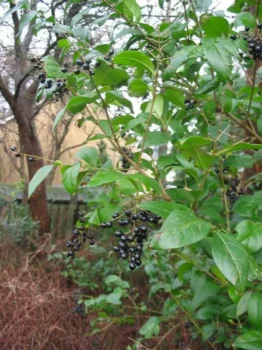
- Black berries that add visual interest
- Exceptional tolerance for heavy pruning and shaping
- Ability to reach up to 16 feet tall and wide at maturity
The plant thrives in USDA hardiness zones 6-9 and adapts to various growing conditions. It prefers medium-textured soils, requires moderate watering, and can handle pH levels between 5.9 and 7.7. California privet also tolerates urban conditions reasonably well, making it attractive for city landscapes.
The Growing Process (If You Must)
While we don’t recommend planting California privet due to its invasive nature, understanding how it grows can help you identify and potentially remove existing specimens. The shrub produces abundant seeds (about 20,000 per pound!) and can be propagated through cuttings, bare root plants, or containers. Seeds require cold stratification and the plant needs at least 160 frost-free days annually.
Better Native Alternatives
Instead of California privet, consider these native alternatives that provide similar benefits without the ecological drawbacks:
- American hornbeam (Carpinus caroliniana): Creates dense screens and supports native wildlife
- Ninebark (Physocarpus opulifolius): Fast-growing with attractive flowers and bark
- Serviceberry species (Amelanchier): Beautiful flowers, berries for wildlife, and fall color
- Spicebush (Lindera benzoin): Excellent for partly shaded areas with fragrant foliage
The Bottom Line
While California privet might seem like the perfect hedge plant—and it certainly delivers on quick results and formal appeal—its invasive tendencies make it a poor choice for environmentally conscious gardeners. The plant’s ability to escape cultivation and establish in natural areas poses real threats to native plant communities.
If you already have California privet on your property, consider gradually replacing it with native alternatives. Your local ecosystem (and the wildlife that depends on native plants) will thank you. Remember, the best gardens work with nature, not against it, creating beautiful spaces that support both your aesthetic goals and local biodiversity.