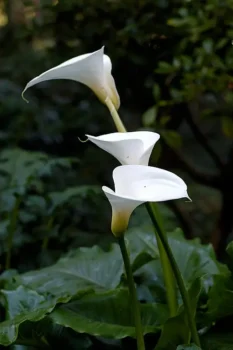
Calla Lily: The Elegant Water Garden Showstopper
With its pristine white blooms and glossy green foliage, the calla lily (Zantedeschia aethiopica) has captured gardeners’ hearts for generations. This striking perennial brings an undeniable elegance to any landscape, but before you fall head-over-heels for its charm, let’s dig into what makes this plant tick and whether it’s the right choice for your garden.
What Exactly Is a Calla Lily?
Despite its common name, the calla lily isn’t actually a true lily at all! Botanically known as Zantedeschia aethiopica (you might also see it listed under its old scientific name, Calla aethiopica), this plant is a perennial forb – basically a non-woody plant that comes back year after year. It’s characterized by its distinctive white spathe (the petal-like part) that wraps around a bright yellow spadix (the spike-like flower structure in the center).
Where Does It Come From?
The calla lily is a South African native, originally from the Western and Eastern Cape provinces. However, it’s definitely made itself at home in other parts of the world. In the United States, you’ll find established populations in California, Hawaii, Oregon, and Puerto Rico, where it has naturalized and reproduces on its own without human intervention.
- Species observed
- No observations
The Good, The Bad, and The Beautiful
Let’s be honest about what you’re getting into with calla lilies:
Why You Might Love Them:
- Absolutely stunning architectural flowers that make incredible cut flowers
- Glossy, arrow-shaped leaves that look great even when not blooming
- Thrives in wet conditions where many other plants struggle
- Relatively low-maintenance once established
- Adds a sophisticated, tropical feel to gardens
Why You Might Want to Think Twice:
- It’s not native to North America, so it won’t support local wildlife ecosystems
- Limited pollinator benefits – mainly attracts flies and beetles rather than beneficial bees and butterflies
- Can be aggressive in ideal conditions and may crowd out native plants
- All parts of the plant are toxic if ingested
Where and How to Grow Calla Lilies
If you decide to welcome calla lilies into your garden, here’s how to keep them happy:
Perfect Growing Conditions:
- Moisture: These plants are water lovers! They’re classified as obligate wetland plants in most regions, meaning they almost always occur in wetlands
- Light: Partial shade to full sun (they appreciate some afternoon shade in hot climates)
- Soil: Rich, organic, consistently moist to wet soil
- Climate: Hardy in USDA zones 8-11
Planting and Care Tips:
- Plant rhizomes in spring after the last frost
- Keep soil consistently moist – never let it dry out completely
- Apply mulch in winter in cooler zones for protection
- Divide clumps every 3-4 years to prevent overcrowding
- In colder zones, consider growing in containers that can be moved indoors
Garden Design Ideas
Calla lilies shine in specific garden settings:
- Water gardens and bog gardens: Their natural habitat preference
- Shade gardens: Perfect for adding bright white blooms to darker areas
- Mediterranean-style gardens: Complements the architectural plants common in this style
- Cut flower gardens: Essential for anyone who loves fresh floral arrangements
Consider Native Alternatives
While calla lilies are beautiful, consider these native alternatives that provide similar aesthetic appeal while supporting local ecosystems:
- Wild calla (Calla palustris) – for northern wetland gardens
- Skunk cabbage (Symplocarpus foetidus) – for early spring interest in wet areas
- Various native iris species – for similar elegant, upright flowers
- Native water lilies and lotus – for water garden settings
The Bottom Line
Calla lilies are undeniably gorgeous and can make stunning additions to the right garden setting. They’re particularly valuable in wet, shady spots where many other flowering plants struggle. However, as a non-native species, they won’t contribute to supporting local wildlife and pollinators the way native plants do.
If you choose to grow them, do so responsibly by keeping them contained and considering native alternatives for other areas of your landscape. With proper care and placement, calla lilies can provide years of elegant beauty – just remember that true garden sustainability comes from embracing the plants that naturally belong in your local ecosystem.