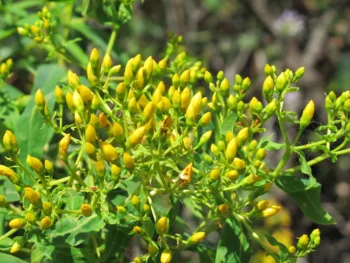
Canary Island St. Johnswort: A Bright Addition to Your Garden
If you’re looking for a cheerful, low-maintenance flowering shrub that brings sunshine to your garden, Canary Island St. Johnswort (Hypericum canariense) might catch your eye. This perennial shrub produces masses of bright yellow flowers that can light up any landscape, though there are some important considerations before adding it to your garden.
What Is Canary Island St. Johnswort?
Canary Island St. Johnswort is a multi-stemmed woody shrub that typically stays under 13-16 feet in height, though it’s usually much smaller in garden settings. True to its name, this plant hails from the Canary Islands and belongs to the St. Johnswort family, known for their distinctive five-petaled yellow flowers and glossy green foliage.
Where Does It Grow?
In the United States, you’ll find Canary Island St. Johnswort established in California and Hawaii. However, it’s important to note that this is a non-native species that has naturalized in these areas, reproducing on its own without human intervention.
- Species observed
- No observations
The Appeal of This Sunny Shrub
What makes this plant attractive to gardeners? Here are its standout features:
- Prolific bright yellow flowers that bloom for extended periods
- Glossy, oval-shaped green leaves that provide year-round interest
- Compact, manageable size perfect for smaller gardens
- Low-maintenance once established
- Attracts bees and other beneficial pollinators
Garden Design and Landscape Use
Canary Island St. Johnswort works beautifully in Mediterranean-style gardens and drought-tolerant landscapes. Its sunny disposition makes it perfect for:
- Border plantings where you want continuous color
- Mass plantings for dramatic impact
- Coastal gardens where it can handle salt spray
- Rock gardens and xeriscaping projects
- Container gardens on patios or decks
Growing Conditions and Care
This shrub is refreshingly easy to please. It thrives in USDA hardiness zones 9-11 and prefers:
- Full sun to partial shade (though more sun means more flowers)
- Well-draining soil of almost any type
- Minimal water once established – perfect for water-wise gardening
- Occasional pruning after flowering to maintain shape
The plant’s drought tolerance makes it an excellent choice for gardeners in dry climates or those looking to reduce water usage.
Planting and Care Tips
Getting started with Canary Island St. Johnswort is straightforward:
- Plant in spring or fall when temperatures are moderate
- Space plants 3-4 feet apart for proper air circulation
- Water regularly during the first growing season to establish roots
- Once established, water only during extended dry periods
- Prune lightly after flowering to encourage bushier growth
- No fertilizer needed in most soils
A Word About Native Alternatives
While Canary Island St. Johnswort is an attractive and well-behaved garden plant, it’s worth considering native alternatives that provide similar benefits while supporting local ecosystems. Depending on your region, native shrubs with yellow flowers might include certain species of wild roses, native azaleas, or regional wildflowers that offer the same sunny charm with added ecological benefits.
The Bottom Line
Canary Island St. Johnswort offers reliable color, easy care, and pollinator appeal – qualities that make it understandable why gardeners are drawn to it. If you choose to grow it, you’ll be rewarded with cheerful blooms and minimal maintenance requirements. Just remember to consider native alternatives first, and always garden responsibly by preventing any plants from escaping into natural areas.
Whether you’re creating a Mediterranean oasis or simply want a splash of sunshine in your garden, this bright little shrub knows how to make an impression.