Growing Capers: The Mediterranean Shrub That Brings Culinary Magic to Your Garden
If you’ve ever wondered where those little green flavor bombs on your pizza come from, meet the caper plant! Capparis spinosa, commonly known as the caper bush, is the Mediterranean shrub responsible for producing those tangy, pickled flower buds that add such distinctive punch to our favorite dishes.
What Exactly Is a Caper Plant?
The caper plant is a hardy, drought-tolerant shrub native to the Mediterranean region, including Southern Europe, North Africa, and parts of Western and Central Asia. Despite its common name suggesting it’s just about those famous buds, this plant is actually quite the garden showstopper with its unique trailing habit and charming flowers.
Why You Might Want to Grow Capers
There are several compelling reasons to consider adding a caper plant to your landscape:
- Culinary rewards: Fresh capers from your own garden taste incredible and cost a fraction of store-bought ones
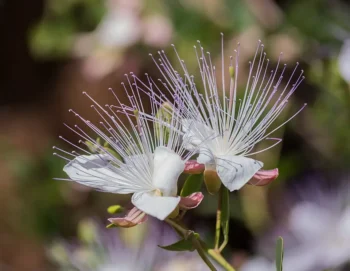
- Unique beauty: The plant produces lovely white to pinkish flowers with prominent stamens that create an almost exotic appearance
- Drought tolerance: Once established, capers are incredibly water-wise
- Pollinator friendly: The flowers attract bees and other beneficial insects
- Architectural interest: The trailing, somewhat sprawling growth habit adds texture to rock gardens and Mediterranean-style landscapes
Garden Design and Landscape Role
Caper plants work beautifully as specimen plants in rock gardens, Mediterranean-themed landscapes, and xeriscaping projects. Their somewhat wild, trailing growth habit makes them perfect for cascading over walls, filling in rocky crevices, or creating interesting focal points in drought-tolerant garden beds. They’re particularly well-suited for coastal gardens where their salt tolerance becomes an additional asset.
Growing Conditions and Care
Capers are surprisingly easy to grow if you can provide the right conditions:
- Sunlight: Full sun is essential for best flowering and caper production
- Soil: Well-draining soil is crucial – they actually prefer poor to moderately fertile soil
- Water: Drought-tolerant once established; avoid overwatering
- Climate: Hardy in USDA zones 8-11
Planting and Care Tips
Getting your caper plant established requires some patience, but the payoff is worth it:
- Plant in spring after the last frost
- Ensure excellent drainage – consider raised beds or rocky slopes
- Water regularly the first year, then reduce to minimal watering
- In marginal zones, protect from harsh winter winds
- Be patient – caper plants can take 2-3 years to begin producing harvestable buds
A Note for North American Gardeners
While caper plants can be a delightful addition to suitable climates, it’s worth noting that they’re not native to North America. If you’re interested in supporting local ecosystems, consider exploring native alternatives that offer similar drought tolerance and pollinator benefits, such as native sages (Salvia species) or desert willow (Chilopsis linearis) in appropriate regions.
The Bottom Line
Capparis spinosa is a fascinating plant that offers both culinary and ornamental value. If you live in a suitable climate zone and enjoy Mediterranean-style gardening, a caper plant could be a unique and rewarding addition to your landscape. Just remember that success with capers requires patience, excellent drainage, and the right climate conditions. When these stars align, you’ll have both a beautiful garden specimen and a source of homegrown culinary treasures!