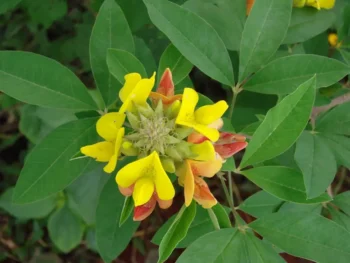
Caracas Rattlebox: A Tropical Shrub with Yellow Blooms
Looking for a low-maintenance shrub that produces cheerful yellow flowers? Meet the Caracas rattlebox (Crotalaria micans), a perennial shrub that’s made itself at home in tropical regions. While this plant isn’t native to the United States, it has established populations in Hawaii and Puerto Rico, where it grows and reproduces on its own.
What Is Caracas Rattlebox?
Caracas rattlebox is a multi-stemmed woody shrub that typically grows less than 13-16 feet tall, though it usually stays much smaller in garden settings. This legume family member gets its common name from its native range around Caracas, Venezuela, and the rattling sound its dried seed pods make in the wind. You might also see it listed under its synonyms Crotalaria anagyroides or Crotalaria brachystachys in older references.
Where Does It Grow?
Originally from Central and South America, Caracas rattlebox has naturalized in Hawaii and Puerto Rico. In these locations, it’s considered a non-native species that reproduces spontaneously and persists without human intervention.
- Species observed
- No observations
Garden Appeal and Characteristics
This shrub offers several appealing features for warm-climate gardens:
- Bright yellow, pea-like flowers arranged in showy terminal clusters
- Silvery-green foliage covered in fine hairs that gives it a soft, textured appearance
- Drought tolerance once established
- Nitrogen-fixing ability that can benefit surrounding plants
- Attracts pollinators including bees and butterflies
Growing Conditions and Care
Caracas rattlebox thrives in USDA hardiness zones 9b through 11, making it suitable only for tropical and subtropical climates. Here’s what it needs to flourish:
- Sunlight: Full sun for best flowering
- Soil: Well-draining soil; adaptable to various soil types
- Water: Drought tolerant once established, but benefits from regular watering during establishment
- Maintenance: Minimal care required; can self-seed readily
Planting and Propagation
Growing Caracas rattlebox is straightforward – it’s easily started from seed and requires little fuss once established. The plant can self-seed in favorable conditions, so you may find volunteer seedlings appearing in your garden.
Should You Plant Caracas Rattlebox?
While Caracas rattlebox can be an attractive addition to tropical gardens, it’s worth considering native alternatives that provide similar benefits while supporting local ecosystems. Since this plant readily self-seeds and establishes in the wild, gardeners in Hawaii and Puerto Rico should monitor its spread and consider removing unwanted seedlings.
If you’re drawn to yellow-flowered shrubs, consider researching native alternatives in your region that can provide similar aesthetic appeal while supporting local wildlife and maintaining ecological balance.
The Bottom Line
Caracas rattlebox is an easy-to-grow, drought-tolerant shrub that produces lovely yellow flowers and attracts pollinators. While it can be a suitable choice for tropical gardens, gardeners should be mindful of its non-native status and tendency to self-seed. As always, native plants are typically the best choice for supporting local ecosystems and wildlife.