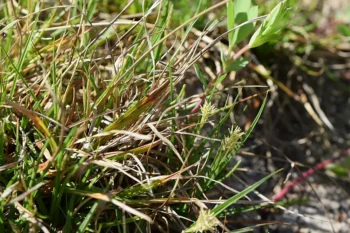
Carex hordeistichos: The Mystery Sedge That Might Not Exist
If you’ve stumbled upon the name Carex hordeistichos in your plant research, you’re not alone in scratching your head. This particular sedge name presents quite the botanical puzzle, and here’s why you might want to pump the brakes before adding it to your shopping list.
The Case of the Missing Sedge
Carex hordeistichos appears to be what botanists might call a ghost plant – a name that exists somewhere in the plant world but lacks substantial documentation in major botanical databases and scientific literature. While the genus Carex is incredibly diverse with over 2,000 species worldwide, this particular species name doesn’t seem to have a well-established identity in current horticultural or scientific resources.
What We Do Know
Based on the limited information available, Carex hordeistichos would belong to the sedge family (Cyperaceae), making it a grass-like perennial plant. Sedges are generally:
- Excellent for naturalizing in gardens
- Valuable for erosion control
- Important food sources for wildlife
- Adapted to various moisture conditions
The Identification Challenge
Without reliable information about this specific plant’s native range, growing requirements, or even confirmation of its validity as a species name, it’s impossible to provide meaningful growing advice. This uncertainty raises an important red flag for gardeners.
What Should You Do?
If you’ve encountered Carex hordeistichos in plant catalogs or online sources, here’s what we recommend:
- Double-check the botanical name with reputable sources
- Contact the seller for verification and additional information
- Consider well-documented native sedge alternatives instead
- Consult with local botanical experts or extension services
Better Sedge Alternatives
Rather than taking a chance on a mystery plant, consider these well-documented native sedges that offer proven garden performance:
- Carex pensylvanica (Pennsylvania sedge) – excellent groundcover
- Carex elata (Tufted sedge) – beautiful in wet areas
- Carex comosa (Longhair sedge) – great for pond margins
- Carex vulpinoidea (Fox sedge) – adaptable and wildlife-friendly
The Bottom Line
While the world of native plants is vast and exciting, it’s always best to stick with species that have reliable documentation and proven garden performance. The mystery surrounding Carex hordeistichos suggests it’s better to choose well-known sedge species that will give you predictable results and confirmed ecological benefits.
Remember, successful native gardening starts with accurate plant identification and reliable information. When in doubt, consult with local native plant societies, botanical gardens, or extension services to ensure you’re making informed choices for your garden.