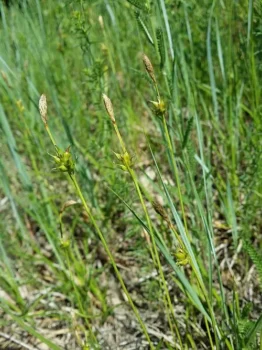
Carex michelii: The Mystery Sedge That’s Hard to Pin Down
If you’ve stumbled across the name Carex michelii in your native plant research, you might be scratching your head trying to find solid information about this elusive sedge. You’re not alone! This particular species is something of a botanical mystery, with very little documentation available in standard plant databases and native gardening resources.
What We Know (And Don’t Know)
Carex michelii belongs to the sedge family (Cyperaceae), making it a grass-like perennial that typically forms clumps or spreads through underground rhizomes. Like other sedges, it would likely produce inconspicuous flowers and have triangular stems – but beyond these basic family characteristics, reliable information becomes surprisingly scarce.
Unfortunately, we don’t have clear information about:
- Common names or regional nicknames
- Native range and geographical distribution
- Specific growing requirements
- Wildlife and pollinator benefits
- Garden performance and care needs
The Challenge of Obscure Plant Names
The lack of information about Carex michelii highlights an important point for native gardeners: not every plant name you encounter will lead to a treasure trove of growing information. This could happen for several reasons – the species might be extremely rare, the name might be an outdated synonym, or there could be confusion in plant identification.
Better Documented Sedge Alternatives
Rather than struggling with an obscure species, consider these well-documented native sedges that offer proven garden performance:
- Pennsylvania Sedge (Carex pensylvanica) – Excellent groundcover for dry shade
- Appalachian Sedge (Carex appalachica) – Great lawn alternative
- Fox Sedge (Carex vulpinoidea) – Thrives in wet areas
- Palm Sedge (Carex muskingumensis) – Striking architectural form
The Importance of Proper Plant ID
If you’re convinced you’ve found Carex michelii growing wild or available from a specialty source, take time to verify the identification with local botanists, native plant societies, or university extension services. Proper identification ensures you’re making informed decisions about what to plant in your garden.
Moving Forward with Your Native Garden
While the mystery of Carex michelii remains unsolved, don’t let this discourage your native gardening journey! Focus on well-documented native sedges that are known to thrive in your region. Your local native plant society can provide excellent recommendations for sedges that will bring both beauty and ecological benefits to your landscape.
Sometimes in native gardening, the plants that seem most intriguing are the ones we know the least about – but there’s wisdom in choosing species with proven track records for successful cultivation and clear conservation value.