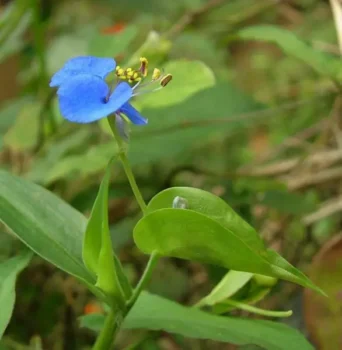
Carolina Dayflower: A Charming Non-Native Annual for Your Garden
If you’re looking for a delicate flowering annual that brings a touch of sky-blue beauty to your garden, the Carolina dayflower (Commelina caroliniana) might catch your eye. This charming little plant has made itself quite at home across much of the southeastern United States, though it’s not actually a native species.
What Is Carolina Dayflower?
Carolina dayflower is an annual forb – essentially a soft-stemmed flowering plant without woody tissue. Despite its common name suggesting Carolina origins, this species is actually a non-native plant that has naturalized across many states. It’s part of the spiderwort family and produces distinctive three-petaled blue flowers that open in the morning and typically close by afternoon, hence the dayflower name.
Where Does It Grow?
You’ll find Carolina dayflower established across a wide swath of the southeastern United States, including Alabama, Arkansas, Florida, Georgia, Louisiana, Maryland, Mississippi, Missouri, North Carolina, South Carolina, and Texas. While it’s introduced rather than native, it has adapted well to these regions and reproduces on its own in the wild.
- Species observed
- No observations
Garden Appeal and Landscape Role
Carolina dayflower brings several appealing qualities to the garden:
- Delicate blue flowers that add a soft color accent
- Heart-shaped leaves that create attractive foliage
- Low-growing habit perfect for ground cover
- Naturalizing tendency that fills in bare spots
In landscape design, this plant works well in cottage gardens, naturalized areas, and informal plantings. Its ability to thrive in both wetlands and uplands makes it adaptable to various garden conditions.
Growing Conditions and Care
Carolina dayflower is relatively easy to grow and quite forgiving. Here’s what it prefers:
- Light: Partial shade to full sun
- Soil: Moist, fertile soil with good drainage
- Water: Consistent moisture (it’s quite adaptable to wet conditions)
- Hardiness: Generally hardy in USDA zones 8-11
The plant’s wetland status varies by region – it can handle both wet and dry conditions, though it generally prefers areas that don’t completely dry out.
Planting and Maintenance Tips
Growing Carolina dayflower is straightforward:
- Sow seeds in spring after frost danger passes
- Keep soil consistently moist during establishment
- Allow plants to self-seed for naturalized areas
- Remove spent flowers if you want to prevent spreading
- Minimal fertilization needed in fertile soils
As an annual, the plant will complete its life cycle in one growing season, though it readily self-seeds in favorable conditions.
Wildlife and Pollinator Benefits
Carolina dayflower attracts small pollinators including bees and flies to its morning blooms. While not as beneficial to native wildlife as indigenous plants, it does provide some nectar resources during its flowering period.
Should You Plant It?
Carolina dayflower can be a pleasant addition to informal gardens and naturalized areas. However, since it’s not native to North America, you might want to consider native alternatives that provide similar benefits while supporting local ecosystems more effectively. Some excellent native options include:
- Virginia spiderwort (Tradescantia virginiana)
- Wild ginger (Asarum canadense) for shaded areas
- Blue-eyed grass (Sisyrinchium species)
If you do choose to grow Carolina dayflower, be mindful of its self-seeding tendency and monitor its spread to ensure it doesn’t overwhelm more desirable plants in your garden.
The Bottom Line
Carolina dayflower is an adaptable, easy-to-grow annual that can add charm to the right garden setting. While it’s not problematic like truly invasive species, supporting native plants when possible helps create healthier, more sustainable garden ecosystems. Whether you choose this naturalized beauty or opt for native alternatives, the key is creating a garden that brings you joy while being mindful of its broader environmental impact.