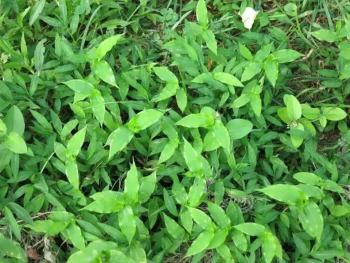
Carpetgrass (Arthraxon): What Every Gardener Should Know About This Non-Native Ground Cover
If you’ve spotted a delicate, low-growing grass spreading across shaded areas of your garden, you might be looking at carpetgrass, scientifically known as Arthraxon. While this annual grass might seem like a harmless ground cover at first glance, there’s more to this story that every gardener should understand.
What is Carpetgrass?
Carpetgrass is a fine-textured annual grass that forms low, carpet-like mats across the ground. Despite its innocent appearance and somewhat appealing common name, this plant is actually a non-native species that has established itself throughout much of the United States. Originally from Asia, this grass has made itself quite at home in American landscapes, perhaps a bit too much so.
Where You’ll Find Carpetgrass
This adaptable grass has spread extensively across the United States, establishing populations in numerous states including Alabama, Arkansas, Delaware, Florida, Georgia, Hawaii, Illinois, Indiana, Kansas, Kentucky, Louisiana, Maryland, Massachusetts, Mississippi, Missouri, New Jersey, New York, North Carolina, Ohio, Oklahoma, Oregon, Pennsylvania, South Carolina, Tennessee, Texas, Virginia, West Virginia, and Puerto Rico. It’s also found in the District of Columbia.
- Species observed
- No observations
Why Gardeners Should Think Twice
While carpetgrass might initially seem like a potential ground cover option, there are several important considerations:
- Non-native status: As a non-native species, carpetgrass doesn’t provide the same ecological benefits as native plants
- Limited wildlife value: This grass offers minimal benefits to local wildlife and pollinators compared to native alternatives
- Spreading tendency: Being an annual that reproduces spontaneously, it can establish persistent populations without human intervention
Growing Conditions and Characteristics
If you’re trying to identify carpetgrass in your landscape, here’s what to look for:
- Habitat preference: Thrives in moist, shaded to partially shaded areas
- Growth pattern: Forms low, spreading carpets as its name suggests
- Hardiness: Adaptable across USDA zones 5-10
- Life cycle: Annual grass that completes its life cycle within one growing season
Better Native Alternatives
Instead of allowing carpetgrass to establish in your landscape, consider these native ground cover options that will provide better ecological value:
- Native sedges: Many Carex species offer similar fine texture with superior wildlife benefits
- Native grasses: Regional native bunch grasses provide habitat and food for local wildlife
- Native wildflowers: Low-growing native perennials offer both ground cover and pollinator support
Management Approach
Rather than intentionally planting carpetgrass, gardeners are better served by:
- Choosing native alternatives that support local ecosystems
- Understanding that this species may appear naturally in disturbed or edge areas
- Focusing on native plant communities that provide lasting ecological benefits
While carpetgrass isn’t necessarily a garden villain, it’s not the hero of the ground cover story either. By choosing native alternatives, you’ll create a landscape that truly supports your local ecosystem while achieving the aesthetic goals you’re after. Your local wildlife – and your garden’s ecological footprint – will thank you for making the native choice.