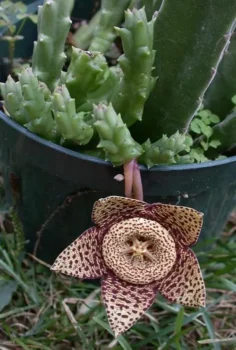
Carrion-Flower: A Quirky Star-Shaped Succulent for Your Garden
If you’re looking for a conversation starter in your succulent collection, the carrion-flower (Orbea variegata) might just be the oddball you need. This South African native brings both beauty and bewilderment to gardens with its stunning star-shaped blooms and rather unusual pollination strategy.
What Makes Carrion-Flower Special?
Don’t let the name fool you – while this plant is called carrion-flower, it’s actually a fascinating succulent that produces some of the most intricate flowers you’ll ever see. The star-shaped blooms are truly spectacular, featuring yellow petals decorated with distinctive red-brown spots and stripes that create an almost leopard-print pattern. These flowers can reach up to 3 inches across and look remarkably like starfish when fully open.
You might also see this plant listed under its former scientific name, Stapelia variegata, in older gardening references.
Where Does Carrion-Flower Come From?
Carrion-flower is native to South Africa, particularly thriving in the Eastern Cape and Western Cape provinces. In its homeland, it grows in rocky, well-draining soils where it has adapted to survive periods of drought and intense sun.
The Good, The Bad, and The Smelly
Why you might want to grow it:
- Absolutely stunning and unique flowers that are real showstoppers
- Extremely drought tolerant once established
- Perfect for rock gardens and succulent collections
- Low maintenance and easy to care for
- Excellent for container growing
- Fascinating conversation piece
Why you might want to think twice:
- The flowers emit a carrion-like smell to attract flies for pollination (hence the name!)
- Not cold hardy – only suitable for USDA zones 9-11
- Not native to North America
- The odor might be off-putting near outdoor seating areas
Growing Conditions and Care
Carrion-flower is surprisingly easy to grow if you can provide the right conditions. Think desert plant and you’ll be on the right track.
Light: Provide full sun to partial shade. In extremely hot climates, some afternoon shade can prevent scorching.
Soil: Well-draining soil is absolutely essential. A cactus and succulent potting mix works perfectly, or amend regular garden soil with plenty of sand and perlite.
Water: Water sparingly and only when the soil is completely dry. Overwatering is the quickest way to kill this plant.
Temperature: Hardy in USDA zones 9-11. In colder climates, grow in containers and bring indoors during winter.
Planting and Care Tips
- Plant in spring after the last frost
- Ensure excellent drainage – consider raised beds or containers if your soil retains moisture
- Space plants about 12 inches apart to allow for air circulation
- Fertilize lightly with a balanced, diluted fertilizer during growing season
- Protect from frost – bring containers indoors or cover outdoor plants when temperatures drop below 40°F
- Propagate easily from stem cuttings – let cut ends dry for a few days before planting
Garden Design Ideas
Carrion-flower works wonderfully in xerophytic gardens, rock gardens, and Mediterranean-style landscapes. It’s particularly striking when planted alongside other succulents with contrasting forms – think tall, architectural agaves paired with the low, sprawling growth of carrion-flower.
For container gardens, this plant is a superstar. Use it as a centerpiece in a large, shallow pot surrounded by smaller succulents, or let it cascade over the edges of hanging baskets.
Native Alternatives to Consider
While carrion-flower isn’t invasive, you might want to consider some native alternatives that provide similar drought tolerance and unique appeal. Depending on your region, look into native sedums, prickly pear cacti (Opuntia species), or other native succulents that support local ecosystems while providing that same low-maintenance charm.
The Bottom Line
Carrion-flower is a delightfully weird addition to the right garden. If you can handle the occasional whiff of its distinctive blooms and provide the well-draining conditions it craves, you’ll be rewarded with one of the most unique flowering succulents around. Just maybe don’t plant it right next to your favorite garden bench!