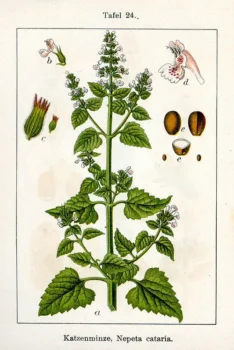
Catnip: The Beloved Herb That’s More Than Just a Cat Treat
If you’ve ever watched a cat go absolutely bonkers over a small green plant, you’ve likely witnessed the magical power of catnip (Nepeta cataria). But this unassuming perennial herb offers far more than just feline entertainment – it’s a hardy, pollinator-friendly plant that can earn its place in gardens across North America.
What Exactly Is Catnip?
Catnip is a perennial forb, meaning it’s an herbaceous plant that lacks woody tissue and dies back to the ground each winter, only to return stronger the following spring. This member of the mint family produces soft, gray-green, heart-shaped leaves with a distinctive fuzzy texture that releases its famous aroma when brushed or crushed.
During summer months, catnip develops attractive spikes of small white or pale pink flowers that may look modest but pack a serious punch when it comes to attracting beneficial insects.
Where Does Catnip Come From and Where Can You Find It?
Originally hailing from Europe, Asia, and Africa, catnip is a non-native species that has made itself thoroughly at home across North America. This adaptable plant has established populations throughout the United States and Canada, thriving in diverse climates from Alaska to Alabama and from coast to coast.
- Species observed
- No observations
You’ll find catnip growing in a wide range of environments, though it typically prefers upland areas rather than wetlands. Its ability to adapt to various conditions has helped it spread extensively throughout its adopted home.
Why Gardeners Love (and Sometimes Curse) Catnip
Catnip brings several appealing qualities to the garden:
- Pollinator magnet: Those unassuming flowers are absolute bee magnets, also attracting butterflies and other beneficial insects
- Low maintenance: Once established, catnip is remarkably drought-tolerant and requires minimal care
- Natural pest deterrent: Ironically, while cats adore it, catnip can help repel mosquitoes, ants, and other garden pests
- Herbal uses: Beyond its famous feline effects, catnip has a long history of human use in teas and traditional remedies
However, there’s a flip side to consider. Catnip can be an enthusiastic self-seeder and may spread more aggressively than some gardeners prefer. If you’re looking for a more controlled garden experience, you might want to deadhead the flowers before they set seed.
Growing Catnip Successfully
The good news for gardeners is that catnip is refreshingly easy to grow. Here’s how to succeed with this resilient herb:
Location and Light: Plant catnip in full sun to partial shade. While it tolerates some shade, you’ll get the best growth and flowering in sunny locations.
Soil Requirements: Catnip isn’t picky about soil type but insists on good drainage. It thrives in average garden soil and actually performs better in lean conditions than overly rich, fertilized ground.
Hardiness: This tough perennial survives winters in USDA zones 3-9, making it suitable for most North American gardens.
Watering: Once established, catnip is quite drought-tolerant. Water regularly during the first growing season, then reduce frequency as the plant matures.
Maintenance: Deadhead spent flowers to encourage continued blooming and prevent excessive self-seeding. Cut the entire plant back by about one-third in mid-summer for a fresh flush of growth.
Perfect Garden Companions and Design Ideas
Catnip works beautifully in several garden styles:
- Herb gardens: Plant alongside other Mediterranean herbs like lavender, rosemary, and thyme
- Cottage gardens: Its informal growth habit fits perfectly with the relaxed cottage garden aesthetic
- Wildlife gardens: Combine with other pollinator plants to create a buzzing haven for beneficial insects
- Perennial borders: Use as a middle-layer plant, where its 2-3 foot height provides good structure
A Word About Native Alternatives
While catnip isn’t invasive and can be a valuable garden addition, consider incorporating some native alternatives that provide similar benefits while supporting local ecosystems. Wild bergamot (Monarda fistulosa), native mints (Mentha arvensis), or anise hyssop (Agastache foeniculum) offer comparable pollinator appeal with stronger connections to native wildlife.
The Bottom Line
Catnip deserves consideration beyond its reputation as a cat toy. This hardy perennial offers genuine garden value through its pollinator appeal, drought tolerance, and easy-care nature. While it may self-seed enthusiastically, simple maintenance practices can keep it well-behaved. Whether you’re creating a dedicated herb garden or simply want to add a reliable perennial that serves both pollinators and possibly your feline friends, catnip might just earn its place in your landscape.
Just don’t be surprised if neighborhood cats start considering your garden their personal spa destination!