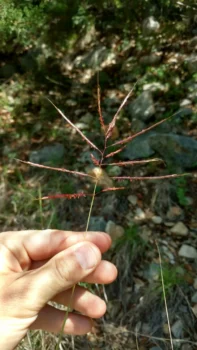
Caucasian Bluestem: A Beautiful Grass with a Dark Side
When it comes to ornamental grasses, Caucasian bluestem (Bothriochloa bladhii) might catch your eye with its graceful, bunch-forming habit and fine-textured foliage. But before you consider adding this perennial grass to your landscape, there’s an important story you need to know about this seemingly innocent plant.
What Is Caucasian Bluestem?
Caucasian bluestem is a non-native perennial grass that originally hails from Asia and the Caucasus region. This hardy grass grows in distinctive bunches, reaching up to 3 feet tall with a semi-erect growth pattern. Its fine-textured, green foliage creates a dense summer canopy that becomes more porous in winter when the plant goes dormant.
You might also encounter this grass under several other scientific names, as it has quite the collection of synonyms including Andropogon bladhii, Bothriochloa caucasica, and Andropogon caucasicus, among others.
Where Does It Grow?
Currently, Caucasian bluestem has established populations across a wide range of states including Colorado, Florida, Hawaii, Kansas, Louisiana, Missouri, Nebraska, New Mexico, Ohio, Oklahoma, and Texas, as well as in Guam and Palau. This widespread distribution tells us something important: this grass is really good at making itself at home in new places.
- Species observed
- No observations
The Invasive Reality
Here’s where things get serious: Caucasian bluestem is classified as invasive in Missouri, and for good reason. This grass reproduces spontaneously in the wild without any human help and tends to persist once established. Its rapid growth rate and ability to spread quickly through seeds (with an impressive 860,000 seeds per pound!) make it a formidable colonizer of natural areas.
When a non-native plant becomes invasive, it can outcompete native species, disrupt local ecosystems, and alter the natural balance that wildlife depends on. This is exactly what makes Caucasian bluestem problematic despite its attractive appearance.
Growing Characteristics
If you’re curious about why this grass spreads so successfully, its growing preferences give us some clues:
- Drought tolerance: High – it can handle dry conditions better than many natives
- Soil adaptability: Thrives in medium-textured soils with pH ranging from 5.0 to 8.0
- Temperature range: Hardy to approximately USDA zones 6-10 (tolerates temperatures down to -23°F)
- Growth rate: Rapid, with quick establishment and aggressive spreading
- Habitat preference: Usually found in upland areas but can tolerate some wetland conditions
Why You Shouldn’t Plant It
While Caucasian bluestem might seem like an attractive, low-maintenance option for your landscape, planting it contributes to the spread of an invasive species. Here’s why that matters:
- It can escape cultivation and invade nearby natural areas
- It competes with and displaces native plant communities
- It offers limited benefits to native wildlife and pollinators
- It’s classified as invasive in Missouri and likely problematic in other regions
Better Native Alternatives
The good news? There are plenty of beautiful native bunch grasses that can give you the same aesthetic appeal without the ecological baggage. Consider these alternatives:
- Little bluestem (Schizachyrium scoparium): A gorgeous native grass with similar height and bunch-forming habit
- Buffalo grass (Bouteloua dactyloides): Perfect for low-water landscaping in appropriate regions
- Blue grama (Bouteloua gracilis): Another drought-tolerant native with fine texture
- Prairie dropseed (Sporobolus heterolepis): Offers beautiful fall color and fragrant flowers
The Bottom Line
While Caucasian bluestem might look appealing in garden centers or online catalogs, its invasive nature makes it a poor choice for responsible gardeners. By choosing native alternatives instead, you’ll create a more sustainable landscape that supports local wildlife while still achieving the ornamental grass look you’re after.
Remember, every plant we choose for our gardens is a vote for the kind of ecosystem we want to support. Let’s make sure we’re voting for native biodiversity rather than invasive species that can harm our local environments.