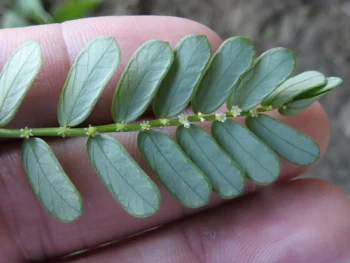
Chamber Bitter: Why This Invasive Plant Should Stay Out of Your Garden
If you’ve spotted a small, delicate-looking plant with tiny leaves arranged like beads along slender stems in your garden, you might be looking at chamber bitter (Phyllanthus urinaria). While this annual forb might seem harmless at first glance, it’s actually an invasive species that gardeners should avoid planting and work to remove from their landscapes.
What is Chamber Bitter?
Chamber bitter is a non-native annual forb that lacks significant woody tissue above ground. This means it’s an herbaceous plant that completes its life cycle in one growing season. Originally from tropical regions of Asia and Africa, this plant has established itself across much of the southeastern United States and beyond.
The plant grows as a small, branching herb with tiny, oval leaves that alternate along its stems in neat, orderly rows. Its inconspicuous green flowers are so small you might miss them entirely, but don’t let that fool you – this plant is a prolific seed producer.
Where Chamber Bitter Has Spread
Chamber bitter has established populations across multiple states including Alabama, Arkansas, Florida, Georgia, Illinois, Louisiana, Mississippi, North Carolina, South Carolina, Tennessee, Texas, and Virginia. It’s also found in Puerto Rico, Guam, and Palau.
- Species observed
- No observations
Why Chamber Bitter is Problematic
This plant carries some serious red flags that should concern any gardener:
- Invasive Status: Chamber bitter is classified as a Category 2 invasive species in Alabama
- Noxious Weed Classification: It’s listed as a Class C noxious weed in Alabama
- Aggressive Spread: It reproduces spontaneously in the wild and tends to persist without human help
- Adaptable: With a facultative wetland status, it can thrive in both wet and dry conditions
Growing Conditions and Spread
Part of what makes chamber bitter so problematic is its adaptability. This plant can grow in various conditions across USDA hardiness zones 8-11. Its facultative wetland status means it’s equally happy in moist garden beds, dry disturbed soils, or anywhere in between. This flexibility allows it to colonize diverse habitats and outcompete native plants.
Limited Garden Value
From a landscaping perspective, chamber bitter offers little to recommend it:
- Minimal Aesthetic Appeal: The plant is small and weedy-looking with unremarkable flowers
- Poor Pollinator Support: Its tiny flowers provide minimal benefit to bees, butterflies, or other pollinators
- Limited Wildlife Value: Native wildlife species have not evolved to depend on this introduced plant
What to Do If You Find Chamber Bitter
If you discover chamber bitter in your garden, the best approach is removal:
- Hand-pull small infestations when soil is moist
- Remove plants before they set seed
- Dispose of pulled plants in municipal waste, not compost
- Monitor the area for new seedlings
Better Native Alternatives
Instead of allowing chamber bitter to establish in your garden, consider these native alternatives that provide real ecological benefits:
- Native wildflowers suited to your region
- Indigenous groundcovers that support local wildlife
- Regional native plants that offer similar low-growing characteristics
Consult your local native plant society or extension office for specific recommendations suited to your area.
The Bottom Line
While chamber bitter might seem like a harmless little plant, its invasive nature and noxious weed status make it a poor choice for any garden. Focus your efforts on native plants that will support local ecosystems, provide better aesthetics, and won’t create problems for natural areas. Your garden – and your local environment – will be better for it.