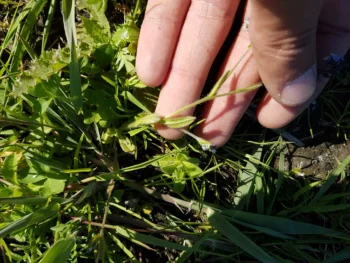
Changing Forget-Me-Not: A Delicate Annual with Color-Changing Blooms
If you’re looking for a petite flower that puts on a subtle color show throughout the growing season, the changing forget-me-not (Myosotis discolor) might catch your eye. This charming little annual earned its descriptive common name from its unique ability to shift flower colors as blooms mature, creating a lovely tapestry effect in the garden.
What is Changing Forget-Me-Not?
Changing forget-me-not is a small annual forb that belongs to the forget-me-not family. Unlike its more famous blue cousins, this species showcases flowers that begin as pink or white buds and gradually transition to soft blue tones as they age. This color-changing characteristic makes it a fascinating addition to gardens where close observation reveals nature’s subtle artistry.
The plant grows as a low-growing forb, meaning it’s a non-woody herbaceous plant that completes its entire life cycle in a single growing season. Despite being an annual, it often self-seeds readily, allowing it to return year after year in favorable conditions.
Native Status and Distribution
Changing forget-me-not is not native to North America. Originally from Europe, particularly Mediterranean and western European regions, this species has established itself as a non-native plant that reproduces spontaneously across much of the continent. It has naturalized and persists in Canada, Hawaii, and throughout the lower 48 states.
You can find this adaptable little plant growing in numerous states and provinces, including Alabama, Arkansas, California, Georgia, Idaho, Kentucky, Massachusetts, Michigan, Montana, Nevada, New York, North Carolina, Oregon, Pennsylvania, Virginia, Washington, and many others, as well as in British Columbia, Nova Scotia, Ontario, and Quebec.
- Species observed
- No observations
Should You Grow Changing Forget-Me-Not?
The decision to grow changing forget-me-not depends on your gardening goals and preferences. Here are some considerations:
Reasons You Might Want to Grow It:
- Unique color-changing flowers provide subtle visual interest
- Low-maintenance annual that often self-seeds
- Tolerates poor soils and drought conditions once established
- Attracts small pollinators like flies and small bees
- Works well in cottage gardens, rock gardens, and naturalized areas
- Provides early season color when many other plants are just emerging
Considerations and Alternatives:
While changing forget-me-not isn’t considered invasive, some gardeners prefer to focus on native species that better support local ecosystems. If you’re interested in supporting native biodiversity, consider these alternatives that offer similar benefits:
- Wild bergamot (Monarda fistulosa) for pollinator attraction
- Native violets (Viola species) for early season color
- Wild ginger (Asarum canadense) for ground cover in shaded areas
- Regional native annuals that provide similar aesthetic appeal
Growing Conditions and Care
Changing forget-me-not is remarkably adaptable and relatively easy to grow, making it suitable for beginning gardeners or those seeking low-maintenance options.
Preferred Growing Conditions:
- Light: Full sun to partial shade
- Soil: Well-drained soils; tolerates poor soil conditions
- Water: Moderate moisture; drought tolerant once established
- Hardiness: Annual behavior allows adaptation to USDA zones 3-9
Wetland Tolerance:
The plant’s relationship with wetland conditions varies by region. In most areas, including the Eastern Mountains, Midwest, and Northeast regions, it’s classified as an Obligate Upland species, meaning it almost never occurs in wetland conditions. However, in some western regions and coastal areas, it shows more flexibility and can occur in both wetland and non-wetland environments.
Planting and Care Tips
Growing changing forget-me-not successfully requires minimal intervention, which is part of its appeal:
- Planting: Sow seeds directly in the garden in early spring or fall
- Spacing: Allow natural spacing as plants are typically small
- Watering: Provide regular moisture during establishment, then reduce watering as plants mature
- Fertilizing: Generally unnecessary; plants often perform well in poor soils
- Self-seeding: Allow some flowers to go to seed if you want plants to return next year
- Maintenance: Minimal care required once established
The Bottom Line
Changing forget-me-not offers gardeners an interesting annual option with its unique color-changing flowers and low-maintenance nature. While it’s not native to North America, it’s also not considered problematic in most areas where it grows. Whether you choose to include it in your garden depends on your personal preferences and gardening philosophy. If you do decide to grow it, you’ll be rewarded with delicate blooms that provide a subtle but charming display throughout the growing season, along with the satisfaction of growing a plant that asks for very little while giving back a gentle beauty that’s easy to appreciate.