Charlock Mustard: The Yellow Wildflower You’re Likely to Encounter
If you’ve ever spotted bright yellow flowers carpeting a field or popping up in disturbed soil, there’s a good chance you’ve met charlock mustard (Sinapis arvensis). This annual forb has made itself quite at home across North America, despite being originally from Europe and Asia. While it’s not exactly what you’d call a garden darling, understanding this plant can help you make informed decisions about your landscape.
What Is Charlock Mustard?
Charlock mustard is an annual forb in the mustard family, meaning it’s a non-woody plant that completes its entire life cycle in one growing season. As a forb, it lacks significant woody tissue and keeps its growing buds at or near ground level. Don’t let its humble classification fool you though – this plant is remarkably successful at establishing itself just about anywhere.
Where You’ll Find It
This adaptable plant has spread far and wide across North America. You can find charlock mustard thriving from Alaska to the Virgin Islands, and from coast to coast including all Canadian provinces and U.S. states. It’s particularly fond of disturbed soils, agricultural areas, roadsides, and waste places.
- Species observed
- No observations
Recognizing Charlock Mustard
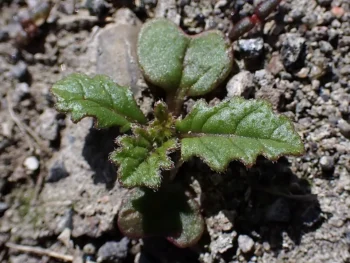
Charlock mustard puts on quite a show with its clusters of bright yellow, four-petaled flowers that bloom from spring through summer. The flowers are arranged in dense, elongated clusters at the top of branching stems. The leaves are generally rough-textured and can be somewhat lobed, giving the whole plant a rather wild, unkempt appearance.
Should You Plant It in Your Garden?
Here’s where things get interesting. While charlock mustard isn’t technically invasive according to our data, it’s also not native to North America. This means it won’t provide the same ecological benefits as native plants, and it can be quite aggressive in spreading itself around your garden.
Most gardeners encounter charlock mustard as a volunteer rather than an invited guest. It has a knack for showing up on its own in:
- Disturbed garden soil
- Compost areas
- Along pathways
- In vegetable gardens
- Areas with poor or compacted soil
Growing Conditions
If charlock mustard does appear in your garden, you’ll notice it’s quite the survivor. It tolerates a wide range of conditions and actually seems to prefer the tough spots that other plants might struggle with. It grows well in full sun and can handle poor soils that would challenge more finicky plants.
Pollinator Benefits
One redeeming quality of charlock mustard is that its bright yellow flowers do attract pollinators, including bees. However, if you’re looking to support local ecosystems, native alternatives will provide much better benefits for native pollinators and wildlife.
Better Native Alternatives
If you’re drawn to the cheerful yellow flowers and easy-growing nature of charlock mustard, consider these native alternatives instead:
- Wild mustard or field mustard (native Brassica species where available)
- Evening primrose (Oenothera species)
- Native sunflowers (Helianthus species)
- Goldenrod (Solidago species)
- Black-eyed Susan (Rudbeckia species)
The Bottom Line
Charlock mustard is one of those plants that’s neither villain nor hero – it’s simply a very successful immigrant that’s made North America its home. While it won’t harm your garden if it shows up, it also won’t contribute much to local ecosystems. If you’re planning a garden that supports native wildlife and pollinators, you’ll get much better results by choosing native plants that have evolved alongside local species.
If you do find charlock mustard growing in your garden and decide to keep it, just be aware that it self-sows readily and may spread more than you initially intended. For most gardeners, appreciating this plant from a distance – perhaps on a nature walk or in wild areas – is the best approach.