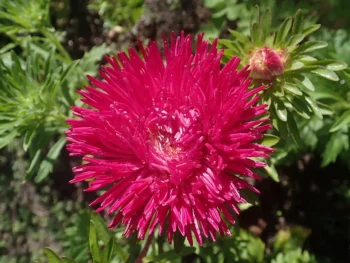
China Aster: A Colorful Annual That’s More Complex Than It Seems
If you’ve ever admired those cheerful, daisy-like flowers blooming in late summer gardens, you might have been looking at China aster (Callistephus chinensis). This popular annual has been brightening up flower beds and cutting gardens for generations, but there’s more to this pretty bloom than meets the eye.
What Exactly is China Aster?
China aster is an annual flowering plant that belongs to the sunflower family. Despite its common name suggesting it’s an aster, it’s actually in its own genus – Callistephus. You might also see it listed under its old scientific name, Aster chinensis, which can add to the confusion. But whatever you call it, this plant produces gorgeous flowers that look like they stepped right out of a cottage garden painting.
The Plot Twist: It’s Not Actually Native
Here’s where things get interesting. While China aster has become a garden staple across much of the United States, it’s not originally from here. This plant is native to China and Korea, and it’s considered a non-native species that has established itself in the wild in several states including Connecticut, Maine, Michigan, New York, Pennsylvania, and Wisconsin.
- Species observed
- No observations
The fact that it reproduces spontaneously without human help means it’s found its way into natural areas, though it’s not currently classified as invasive or noxious.
Why Gardeners Love (and Grow) China Aster
Despite its non-native status, China aster has earned its place in many gardens for several compelling reasons:
- Stunning flowers: Blooms come in a rainbow of colors including purple, pink, white, and blue, with dense, ruffled petals surrounding bright yellow centers
- Perfect timing: Flowers from late summer into fall when many other annuals are fading
- Pollinator magnet: Bees, butterflies, and other beneficial insects love the nectar-rich blooms
- Cut flower gold: Makes excellent bouquets with good vase life
- Easy to grow: As an annual, it’s straightforward to cultivate and doesn’t require long-term commitment
Growing China Aster Successfully
If you decide to grow China aster, here’s what you need to know to keep these beauties happy:
Growing Conditions: China aster thrives in full sun to partial shade and prefers well-drained, fertile soil. While it can tolerate various soil types, it performs best when the soil stays consistently moist but not waterlogged.
Climate Considerations: As an annual, China aster can be grown in USDA hardiness zones 2-11, making it adaptable to most climates across the country.
Planting Tips: Start seeds indoors 6-8 weeks before your last expected frost, or direct sow in the garden after the danger of frost has passed. Space plants 6-12 inches apart to give them room to flourish.
Ongoing Care: Regular watering and deadheading spent flowers will keep your China asters blooming strong. Taller varieties might need staking to prevent them from flopping over, especially in windy locations.
Garden Design Ideas
China aster works beautifully in cottage gardens, annual flower borders, and cutting gardens. Its upright growth habit and colorful blooms make it an excellent choice for container gardens too. The plants typically reach 12-30 inches tall and spread about 12 inches wide, making them perfect for middle-of-the-border placement.
A Word About Native Alternatives
While China aster certainly has its merits, gardeners interested in supporting local ecosystems might consider native alternatives that provide similar beauty and pollinator benefits. Native asters like New England aster (Symphyotrichum novae-angliae) or aromatic aster (Symphyotrichum oblongifolium) offer gorgeous fall blooms and provide crucial late-season food for pollinators preparing for winter.
The Bottom Line
China aster is a beautiful, relatively easy-to-grow annual that can add spectacular color to your late-season garden. While it’s not native to North America, it’s also not considered problematic in most areas where it grows. Whether you choose to include it in your garden is really a matter of personal preference and gardening philosophy. Just remember to deadhead those spent blooms if you’re in an area where it’s established in the wild – a little garden housekeeping can go a long way!