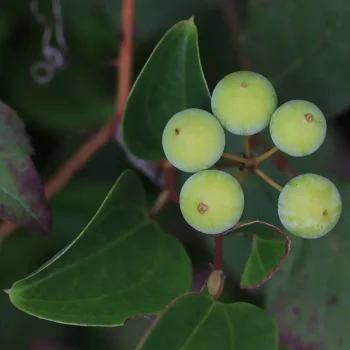
China Root: A Thorny Climbing Vine with Ancient Roots
Meet Smilax china, commonly known as China root – a climbing vine that’s been making its way into American gardens despite its far-from-home origins. This thorny character brings both beauty and controversy to the landscape, and like many immigrant plants, it has quite a story to tell.
What Exactly Is China Root?
China root is a perennial climbing vine that belongs to the Smilax family, known for their characteristic heart-shaped leaves and don’t-mess-with-me thorns. This particular species hails from Eastern Asia, specifically China, Japan, and Korea, where it has been valued for centuries both medicinally and ornamentally.
The plant produces small, unremarkable greenish flowers that eventually develop into bright red berries – a feature that often catches gardeners’ attention and wildlife’s appetite alike.
Native Status and Geographic Distribution
Let’s get one thing straight: China root is not native to North America. This vine is an introduced species from Eastern Asia that has found its way into various parts of the United States, particularly in the southeastern regions.
While it’s not currently listed as invasive in most areas, it’s always wise to check with your local extension office about any restrictions or concerns in your specific region.
The Good, The Bad, and The Thorny
Why you might want it:
- Excellent for privacy screening with its dense growth habit
- Attractive heart-shaped foliage provides good coverage
- Red berries add winter interest and feed wildlife
- Historically significant plant with medicinal uses
- Relatively low maintenance once established
Why you might think twice:
- Those thorns mean business – not great near walkways
- Can grow quite vigorously and may need regular pruning
- Not native, so it won’t support native wildlife as effectively as indigenous alternatives
- May require sturdy support structures due to its climbing nature
Growing China Root Successfully
If you’ve decided to give China root a try, here’s what you need to know:
USDA Hardiness Zones: 7-10
Growing Conditions:
- Light: Partial shade to full sun (adapts well to various light conditions)
- Soil: Well-draining soil, tolerates various soil types including clay and sandy soils
- Water: Drought tolerant once established, but appreciates regular watering during dry spells
- Space: Can climb 10-20 feet, so plan accordingly
Planting and Care Tips:
- Provide a sturdy support structure – arbors, fences, or trellises work well
- Plant in spring after the last frost
- Mulch around the base to retain moisture and suppress weeds
- Prune regularly to control growth and shape
- Wear gloves when handling – those thorns are no joke!
Wildlife and Pollinator Benefits
While China root isn’t native, it does provide some benefits to local wildlife. The small flowers attract various insects during blooming season, and the bright red berries are enjoyed by birds during fall and winter months. However, these benefits are generally less significant than what native alternatives would provide.
Consider Native Alternatives
If you’re looking for similar screening or climbing vine effects, consider these native alternatives that will better support local ecosystems:
- American groundnut (Apios americana)
- Crossvine (Bignonia capreolata)
- Native honeysuckles (Lonicera species)
- Wild grape (Vitis riparia)
The Bottom Line
China root can be a useful addition to certain garden situations, particularly where you need screening and don’t mind regular maintenance. However, before planting any non-native species, consider whether a native alternative might serve your needs just as well while providing better support for local wildlife. If you do choose to grow China root, be prepared for its vigorous nature and keep those pruning shears handy!
Remember, gardening is about creating spaces that work for both you and the environment around you. Whatever you choose to plant, do so thoughtfully and responsibly.