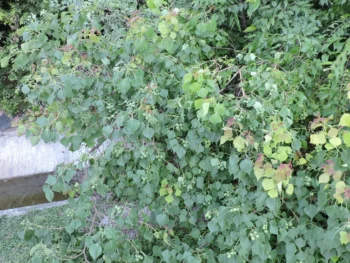
Chinese Tallow Tree: A Beautiful But Dangerous Invasive Species to Avoid
If you’ve ever admired a tree with stunning fall colors and heart-shaped leaves, you might have encountered the Chinese tallow tree (Triadica sebifera). While this tree certainly has visual appeal, it’s one plant that native gardening enthusiasts should absolutely avoid – and here’s why.
What Is the Chinese Tallow Tree?
The Chinese tallow tree, also known by its botanical name Triadica sebifera, is a perennial deciduous tree that can grow quite large – typically reaching heights greater than 13-16 feet, though it can grow much taller under ideal conditions. You might also see this plant referenced by its older scientific names, including Croton sebiferum or Sapium sebiferum.
This fast-growing tree produces small, yellowish flowers in spring and distinctive white, waxy berries. But don’t let its attractive heart-shaped leaves and spectacular fall colors of yellow, orange, and red fool you – this is one tree you definitely don’t want in your landscape.
Why You Should Never Plant Chinese Tallow
Here’s the crucial information every gardener needs to know: Chinese tallow is a highly invasive, non-native species that poses a serious threat to our native ecosystems. Originally from eastern China, this tree has established itself as an aggressive invader across the southeastern United States.
The invasive status is official and alarming:
- Classified as Category 1 invasive in Alabama
- Listed as invasive in North Carolina
- Considered a major ecological threat in many other states
Where Chinese Tallow Has Spread
This invasive tree has unfortunately established populations across multiple states, including Alabama, Arkansas, California, Florida, Georgia, Louisiana, Mississippi, North Carolina, South Carolina, and Texas. Its ability to thrive in both wetland and upland areas (it has a facultative wetland status across all regions) makes it particularly problematic, as it can invade diverse habitats.
- Species observed
- No observations
The Problem with Chinese Tallow
Chinese tallow trees are ecological bullies. They reproduce aggressively without human intervention, quickly establishing dense stands that crowd out native plants. This rapid spread disrupts local ecosystems, reduces biodiversity, and can fundamentally alter the character of natural areas.
While the tree does attract pollinators to its flowers, this minor benefit is vastly outweighed by the ecological damage it causes. Native wildlife depends on native plants, and invasive species like Chinese tallow disrupt these crucial relationships.
Growing Conditions (Why It’s So Successful)
Part of what makes Chinese tallow so problematic is its adaptability. This invasive tree thrives in USDA hardiness zones 8-10 and tolerates a wide range of growing conditions. It can handle both wet and dry soils, full sun to partial shade, and various soil types. This adaptability is exactly why it’s been so successful at invading diverse habitats across the southeastern United States.
What to Do If You Have Chinese Tallow
If you discover Chinese tallow on your property, the responsible action is removal. Because this is such an aggressive invasive species, leaving it in place contributes to ongoing ecological damage in your area.
For removal advice and native alternatives, consult with local extension services, native plant societies, or invasive species management organizations in your area.
Better Alternatives for Your Landscape
Instead of Chinese tallow, consider these native alternatives that provide beautiful fall color without the ecological harm:
- Native maples for spectacular fall displays
- Native oaks for long-term landscape value
- Regional native trees that support local wildlife
Your local native plant society or cooperative extension can help you identify the best native trees for your specific location and growing conditions.
The Bottom Line
While Chinese tallow might catch your eye with its attractive appearance, this is one tree that belongs on the never plant list. By choosing native alternatives instead, you’ll create a more sustainable landscape that supports local wildlife and helps preserve the natural character of your region. Remember: sometimes the most beautiful choice isn’t the most responsible one, and Chinese tallow is a perfect example of why invasive species management matters in home landscapes.