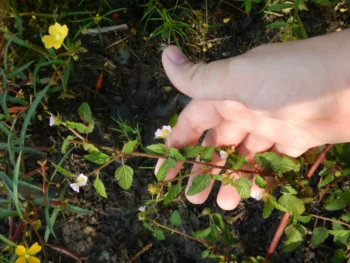
Chocolateweed: A Hardy Annual for Low-Maintenance Gardens
If you’re looking for a tough, no-fuss annual that can handle neglect and still put on a cheerful show, chocolateweed (Melochia corchorifolia) might catch your attention. This unassuming little plant has quietly made itself at home across much of the southeastern United States, and while it may not win any beauty contests, it certainly earns points for persistence and adaptability.
What Exactly is Chocolateweed?
Despite its intriguing common name, chocolateweed won’t satisfy your sweet tooth – the name likely refers to the plant’s somewhat chocolate-colored stems or seeds. This annual forb belongs to the mallow family and grows as a non-woody herbaceous plant, meaning it lacks the significant woody tissue you’d find in shrubs or trees. Instead, it produces fresh growth each year from seed, living fast and reproducing readily before the season ends.
As a forb, chocolateweed fits into that diverse category of flowering plants that aren’t grasses, sedges, or woody plants. Think of it as part of nature’s supporting cast – not always the star of the show, but playing an important role in the ecosystem.
Where You’ll Find Chocolateweed Growing
Originally from tropical and subtropical regions of the Americas, chocolateweed has established itself across a impressive range of U.S. states, including Alabama, Arkansas, Florida, Georgia, Illinois, Louisiana, Maryland, Mississippi, Missouri, New York, North Carolina, South Carolina, and Texas. It’s what botanists call a naturalized species – a non-native plant that reproduces on its own in the wild without human assistance.
- Species observed
- No observations
The plant shows remarkable adaptability to different moisture conditions. In most regions, it has a facultative wetland status, meaning it’s equally happy in wet or dry locations. In the Midwest and Northeast, it leans slightly toward drier conditions with a facultative upland designation.
Should You Plant Chocolateweed?
Here’s where things get interesting. Chocolateweed presents a bit of a gardening dilemma – it’s non-native, but it’s not considered invasive or harmful. So what’s a responsible gardener to do?
The case for chocolateweed includes:
- Extremely low maintenance requirements
- Tolerance for poor soils and drought conditions
- Ability to colonize disturbed areas quickly
- Small yellow flowers that attract pollinators
- Self-seeding nature means it comes back reliably
However, as a non-native species, it won’t provide the same ecological benefits as indigenous plants. If you’re committed to supporting local wildlife and maintaining regional biodiversity, you might want to consider native alternatives that offer similar benefits.
Native Alternatives to Consider
Before you decide on chocolateweed, consider these native options that might serve similar purposes in your garden:
- Wild bergamot (Monarda fistulosa) for pollinator attraction
- Partridge pea (Chamaecrista fasciculata) for nitrogen fixation and ground cover
- Wild columbine (Aquilegia canadensis) for naturalized areas
- Local native wildflowers specific to your region
Growing Chocolateweed Successfully
If you do decide to grow chocolateweed, you’ll find it refreshingly undemanding. This plant thrives in USDA hardiness zones 8-11, which aligns well with its current natural distribution.
Here are the basics for success:
Light Requirements: Full sun to partial shade – chocolateweed isn’t picky about lighting conditions.
Soil Preferences: Almost any soil type will do. This plant actually performs well in poor, disturbed soils where other plants might struggle.
Water Needs: Drought tolerant once established, but will accept regular watering without complaint.
Planting: As an annual, chocolateweed grows from seed each year. You can scatter seeds in early spring, or simply let existing plants self-seed.
What to Expect
Chocolateweed won’t overwhelm you with showy blooms, but it will provide consistent, small yellow flowers throughout the growing season. The heart-shaped leaves create a pleasant, informal texture, and the plant typically reaches modest heights without becoming overwhelming.
The flowers attract small pollinators including bees and flies, contributing to the garden’s ecosystem even if they don’t support as wide a range of wildlife as native plants would.
Care and Maintenance
One of chocolateweed’s strongest selling points is how little care it requires. Once established, this plant pretty much takes care of itself. You might want to:
- Remove spent flowers if you want to prevent excessive self-seeding
- Allow some flowers to go to seed if you want the plant to return next year
- Water during extended dry periods, though it’s not strictly necessary
- Be prepared for its self-seeding habits – it may show up in unexpected places
The Bottom Line
Chocolateweed represents a gardening compromise – it’s not native, but it’s not problematic either. If you have challenging growing conditions, poor soil, or areas where you need something reliable and low-maintenance, it could work for you. Just remember that choosing native plants whenever possible will always provide greater benefits for local wildlife and ecosystem health.
Whether you choose chocolateweed or opt for native alternatives, the most important thing is creating a garden that brings you joy while being mindful of your local environment. After all, every garden is a personal expression of our relationship with the natural world around us.