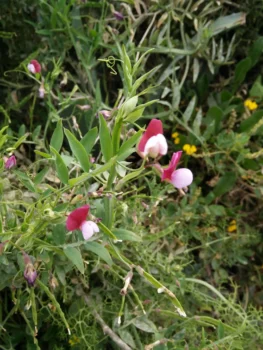
Cicercha Purpurina: A Mediterranean Charmer for Your Garden
Looking to add some Old World charm to your garden? Meet cicercha purpurina (Lathyrus clymenum), also known as Spanish vetchling. This delightful Mediterranean native might just be the climbing annual you never knew you needed – or perhaps one you’ll want to think twice about, depending on your garden goals.
What is Cicercha Purpurina?
Cicercha purpurina is a member of the pea family that hails from the sun-soaked Mediterranean region, particularly Spain, Portugal, and parts of North Africa. You might also see it listed under its synonym Lathyrus articulatus. This charming climber produces lovely purple-pink flowers that look right at home scrambling up a trellis or tumbling over a garden wall.
Where Does It Come From?
This Mediterranean native thrives in the warm, dry climates of southern Europe and North Africa. It’s perfectly adapted to those long, hot summers and mild, wet winters that characterize the Mediterranean climate.
Garden Appeal and Design Role
What makes cicercha purpurina special? Here’s what catches the eye:
- Attractive purple-pink pea-like flowers that bloom throughout the growing season
- Climbing habit that’s perfect for vertical interest
- Delicate, compound leaves that create lovely texture
- Relatively compact size that won’t overwhelm smaller spaces
This plant works beautifully in Mediterranean-style gardens, cottage gardens, and wildlife-friendly landscapes. Use it to soften hard edges, add vertical interest to bare walls, or create a living screen on trellises and arbors.
Growing Conditions and Care
If you’re gardening in USDA zones 8-10, cicercha purpurina might be worth a try. Here’s what it needs to thrive:
- Sunlight: Full sun to partial shade
- Soil: Well-drained soil (it’s quite forgiving about soil type)
- Water: Drought tolerant once established, but appreciates regular water during establishment
- Support: Provide a trellis, fence, or other support for its climbing habit
Planting and Care Tips
Growing cicercha purpurina is refreshingly straightforward:
- Direct sow seeds in spring after the last frost date
- Scarify seeds lightly or soak overnight for better germination
- Plant about 1/2 inch deep and 6 inches apart
- Install support structures before or soon after planting
- Once established, it needs minimal care – just occasional watering during dry spells
Wildlife and Pollinator Benefits
The purple-pink flowers are excellent for attracting bees and butterflies to your garden. Like other members of the pea family, the flowers provide both nectar and pollen, making them valuable resources for beneficial insects.
Should You Plant It?
Here’s the honest truth: while cicercha purpurina is a lovely plant that’s not considered invasive, it’s not native to North America. If you’re focused on supporting local ecosystems and native wildlife, you might want to consider native alternatives first.
Some native climbing alternatives to consider include:
- American groundnut (Apios americana)
- Wild bean (Strophostyles helvola)
- Coral honeysuckle (Lonicera sempervirens)
- Native morning glories (Ipomoea species)
That said, if you’re gardening in a Mediterranean climate and want to create an authentic Mediterranean garden feel, cicercha purpurina could be a good fit. It’s well-behaved, attractive, and beneficial to pollinators.
The Bottom Line
Cicercha purpurina is one of those plants that sits in the nice but not necessary category for most North American gardeners. It’s beautiful, easy to grow, and beneficial to pollinators, but it doesn’t offer the unique ecosystem benefits that native plants provide. Consider your garden goals: if you’re creating a Mediterranean-themed space and live in an appropriate climate zone, go for it. If you’re focused on supporting native wildlife and ecosystems, there are probably better choices waiting for you at your local native plant sale.