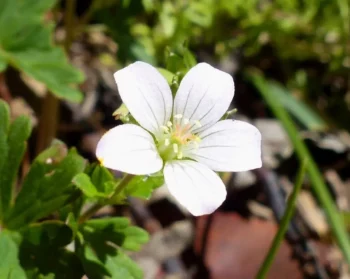
Cinquefoil Geranium: A Little-Known Introduced Perennial
If you’ve stumbled across the name cinquefoil geranium (Geranium potentilloides), you’re likely dealing with one of the lesser-known members of the geranium family. This perennial forb has quietly made its way into California’s flora, though it remains something of a botanical mystery for most gardeners.
What Exactly Is Cinquefoil Geranium?
Cinquefoil geranium is a non-native perennial that belongs to the true geranium family—not to be confused with the colorful annual geraniums (Pelargoniums) you see cascading from window boxes. As a forb, this plant lacks woody stems and dies back to ground level, with its growing points tucked safely below or at the soil surface to survive through seasons.
You might also encounter this plant listed under its botanical synonym, Geranium microphyllum Hook. f., which gives you a hint about one of its characteristics—those tiny leaves (microphyllum literally means small-leaved).
Where You’ll Find It
Currently, cinquefoil geranium has been documented growing in California, where it has established itself as an introduced species that reproduces on its own in the wild. Unlike some garden escapees that struggle to survive without human care, this little geranium has proven quite capable of making itself at home.
- Species observed
- No observations
The Garden Consideration
Here’s where things get interesting (and a bit frustrating for plant enthusiasts): there’s surprisingly little information available about growing cinquefoil geranium in cultivation. This could mean several things—it might be too new to horticulture, too challenging to grow, or simply overlooked in favor of showier relatives.
Since we don’t have solid data on its invasive potential, growth habits, or specific care requirements, approaching this plant requires some caution and common sense. While it’s not currently flagged as invasive or noxious, any non-native plant deserves thoughtful consideration before introduction to your garden.
A More Informed Alternative
If you’re drawn to the idea of growing native or well-behaved geraniums, consider exploring some fantastic native alternatives:
- Wild geranium (Geranium maculatum) – A beloved native with delicate pink flowers
- Spotted geranium – Another native option with attractive foliage and flowers
- Richardson’s geranium (Geranium richardsonii) – A western native with white to pink blooms
These native species offer the charm of true geraniums while supporting local ecosystems and pollinators in ways that non-native plants simply cannot match.
The Bottom Line
Cinquefoil geranium remains something of an enigma in the gardening world. While it’s managed to establish itself in California’s wild spaces, its garden potential and environmental impact are still question marks. For most gardeners, this uncertainty makes it a less appealing choice compared to the many well-documented native geraniums available.
If you do encounter this plant in the wild, appreciate it as part of California’s complex introduced flora—but when it comes to your own garden, you’ll probably find more satisfaction (and success) with native alternatives that come with clear growing instructions and known benefits for local wildlife.
Remember, the best gardens are built on plants we understand, and sometimes the most responsible choice is to admire a plant from afar while we learn more about its true nature and needs.