Cistus ×purpureus: The Stunning Purple Rock Rose for Drought-Tolerant Gardens
Meet Cistus ×purpureus, a Mediterranean beauty that’s been quietly winning over gardeners with its stunning magenta-pink blooms and rock-solid resilience. Also known as Purple-flowered Rock Rose or Orchid Rock Rose, this hardy shrub brings a splash of vibrant color to drought-prone landscapes where many other flowering plants simply give up.
What Makes This Plant Special?
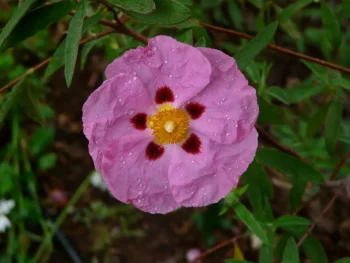
This charming shrub is actually a natural hybrid between two Mediterranean natives: Cistus ladanifer and Cistus creticus. The result? A plant that combines the best traits of both parents, producing eye-catching flowers that are truly something to behold. Each bloom features five delicate, papery petals in rich magenta-pink, adorned with distinctive dark red blotches at the base that create a striking contrast.
The silvery-green foliage provides an elegant backdrop for the colorful display, and the entire plant maintains an attractive, rounded form that works beautifully in structured landscape designs.
Native Range and Geographic Distribution
Cistus ×purpureus originates from the Mediterranean region, where it evolved in the wild as a hybrid between its parent species. This Mediterranean heritage is key to understanding why it thrives in hot, dry conditions that would stress many other garden plants.
Garden Design and Landscape Role
This versatile shrub typically grows 3-4 feet tall and wide, making it perfect for:
- Mediterranean-style gardens
- Rock gardens and xeriscaping projects
- Coastal landscapes (it tolerates salt spray beautifully)
- Slope stabilization in dry areas
- Mixed borders with other drought-tolerant plants
Its moderate size and attractive form make it an excellent choice for foundation plantings or as a specimen plant in smaller gardens. The purple blooms create stunning combinations with lavender, rosemary, and other Mediterranean herbs.
Growing Conditions and Care
Here’s where Cistus ×purpureus really shines – it’s remarkably easy to grow once you understand its preferences:
Sunlight: Full sun is essential for best flowering and plant health. This sun-lover needs at least 6-8 hours of direct sunlight daily.
Soil: Well-draining soil is absolutely crucial. This plant despises wet feet and will quickly succumb to root rot in heavy, waterlogged soils. Sandy or gravelly soils are ideal.
Water: Once established (usually after the first year), this shrub is impressively drought-tolerant. Water deeply but infrequently, allowing the soil to dry between waterings.
USDA Hardiness Zones: Suitable for zones 8-10, though it may survive in protected areas of zone 7 with good drainage and winter protection.
Planting and Care Tips
Getting your Purple Rock Rose off to a good start is straightforward:
- Plant in spring or fall when temperatures are moderate
- Dig a hole twice as wide as the root ball but no deeper
- Amend heavy soils with coarse sand or gravel to improve drainage
- Water regularly the first year to establish roots, then reduce watering significantly
- Prune lightly after flowering to maintain shape – avoid heavy pruning as these plants don’t regenerate well from old wood
- Avoid fertilizing, as rich soils can make the plant leggy and reduce flowering
Pollinator and Wildlife Benefits
Don’t let anyone tell you that non-native plants can’t support local wildlife! Cistus ×purpureus is a pollinator magnet, attracting bees, butterflies, and other beneficial insects with its abundant, pollen-rich flowers. The blooming period typically spans late spring through early summer, providing nectar when many pollinators need it most.
Consider Native Alternatives
While Cistus ×purpureus isn’t invasive and makes a lovely garden addition, consider these native alternatives that offer similar drought tolerance and wildlife benefits:
- Ceanothus species (California lilac) for western gardens
- Native salvias for most regions
- Penstemon species for colorful, drought-tolerant blooms
- Local native shrubs adapted to your specific region
The Bottom Line
Cistus ×purpureus earns its place in water-wise gardens through sheer beauty and reliability. If you’re dealing with poor, dry soil and blazing sun – conditions where many plants struggle – this Mediterranean hybrid could be exactly what your landscape needs. Just remember to give it the drainage it craves and resist the urge to overwater, and you’ll be rewarded with years of stunning purple blooms and virtually maintenance-free beauty.
Whether you’re creating a Mediterranean oasis or simply need a tough, attractive shrub for a challenging spot, the Purple Rock Rose proves that sometimes the most beautiful gardens are the ones that work with nature rather than against it.