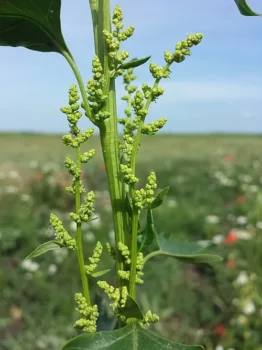
City Goosefoot: The Urban Wanderer You Might Already Know
If you’ve ever wandered through a vacant lot, along a sidewalk crack, or through an abandoned garden, you’ve likely encountered city goosefoot (Chenopodium urbicum) without even knowing it. This unassuming annual plant has made itself quite at home across North America, despite originally hailing from Europe and western Asia.
What Exactly is City Goosefoot?
City goosefoot is an annual forb—basically a non-woody plant that completes its entire life cycle in one growing season. Don’t let the goosefoot name fool you; it’s not related to waterfowl at all! The name comes from the shape of its leaves, which supposedly resemble a goose’s webbed foot if you squint just right.
This adaptable little plant typically grows 1-3 feet tall with a somewhat sprawling habit. Its triangular to diamond-shaped leaves have distinctly toothed margins, and it produces small, greenish flowers clustered together in dense spikes. While not exactly a showstopper, it has a certain scrappy charm.
Where You’ll Find It
City goosefoot has spread far beyond its European origins and now grows throughout much of North America. You can find it across Canada in British Columbia, New Brunswick, Nova Scotia, Ontario, and Quebec. In the United States, it’s established in over 20 states, from Connecticut to Oregon, and from Maine to Tennessee.
- Species observed
- No observations
True to its name, this plant thrives in urban and disturbed environments. It’s perfectly content growing in poor soils, vacant lots, roadsides, and other places where many plants would struggle.
Should You Plant City Goosefoot?
Here’s where things get interesting. While city goosefoot isn’t considered invasive or particularly harmful, it’s also not a plant most gardeners intentionally cultivate. As a non-native species, it doesn’t provide the same ecological benefits as native plants that co-evolved with local wildlife.
If you’re looking to support local ecosystems, consider these native alternatives instead:
- Lamb’s quarters (Chenopodium album) – though this is also non-native, there are native Chenopodium species in some regions
- Wild spinach or native amaranth species
- Native plants suited to your specific region and growing conditions
Growing Conditions and Care
If city goosefoot does appear in your garden (and it probably will on its own), it’s remarkably easy to manage. This hardy annual tolerates:
- Poor, disturbed soils
- Full sun to partial shade
- Drought conditions once established
- USDA hardiness zones 3-9
The plant self-seeds readily, so you’ll likely see it return year after year without any effort on your part. It’s wind-pollinated, which means it doesn’t offer much for bees and butterflies, but it can provide some late-season seeds for birds.
The Bottom Line
City goosefoot is one of those plants that quietly does its own thing, filling in the gaps in our urban landscapes. While it’s not going to win any garden design awards, it serves as a reminder of nature’s incredible ability to adapt and thrive in unexpected places. If you spot it in your garden, you can leave it be without worry—just remember that choosing native plants for your intentional plantings will better support your local ecosystem.
Sometimes the most interesting plants are the ones that show up uninvited, teaching us about resilience and the ever-changing nature of our urban environments.