Clasping Pepperweed: What Every Gardener Should Know About This Widespread Weed
If you’ve ever wandered through a field, vacant lot, or even noticed weeds sprouting along roadsides, chances are you’ve encountered clasping pepperweed (Lepidium perfoliatum). This distinctive little plant has quite the story to tell – and understanding it can help you make better decisions for your garden and local ecosystem.
What Exactly is Clasping Pepperweed?
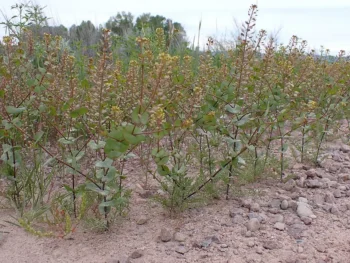
Clasping pepperweed is an annual to biennial forb, which is just a fancy way of saying it’s a non-woody plant that completes its life cycle in one to two years. What makes this plant particularly interesting (and easy to identify) are its unique leaves that appear to be pierced right through the middle by the stem – hence the clasping part of its name.
As a member of the mustard family, clasping pepperweed produces small, white flowers arranged in dense, branching clusters. Don’t let its delicate appearance fool you though – this plant is tougher than it looks.
Where Did It Come From and Where Is It Now?
Originally hailing from Europe and Asia, clasping pepperweed has become quite the world traveler. It’s now established as a non-native species throughout North America, reproducing on its own and persisting across Alaska, Canada, and the lower 48 states. You can find it thriving in an impressive list of locations, from Alberta and British Columbia all the way down to Arizona and Georgia, and just about everywhere in between.
- Species observed
- No observations
Should You Plant Clasping Pepperweed in Your Garden?
Here’s where things get interesting. While clasping pepperweed isn’t officially classified as invasive in our data, its widespread distribution and weedy nature suggest it’s pretty good at taking care of itself – perhaps a little too good. As gardeners who care about supporting local ecosystems, there are some important considerations:
The Not-So-Great News
- It’s non-native across all of North America
- It tends to colonize disturbed areas aggressively
- It offers minimal benefits to native wildlife and pollinators
- It can outcompete native plants for resources
A Better Alternative: Choose Native Instead
Rather than intentionally planting clasping pepperweed, consider supporting your local ecosystem with native alternatives that provide similar aesthetic appeal but offer genuine benefits to wildlife. Native wildflowers and forbs in your area will provide much better support for local pollinators, birds, and other wildlife.
Growing Conditions and Hardiness
If you’re dealing with existing clasping pepperweed on your property, it’s helpful to understand what makes it tick. This adaptable plant is remarkably unfussy about its growing conditions:
Wetland Preferences
Clasping pepperweed shows different moisture preferences depending on where it’s growing:
- In Alaska and the Eastern Mountains: Prefers upland (non-wetland) areas
- In the Great Plains and Midwest: Can handle both wetland and upland conditions
- In most other regions: Usually sticks to non-wetland areas but can tolerate some moisture
General Growing Conditions
This hardy plant typically thrives in disturbed soils and can handle a wide range of conditions, making it particularly common along roadsides, in fields, and waste areas. It’s adaptable to USDA hardiness zones 3-9.
The Bottom Line for Gardeners
While clasping pepperweed isn’t necessarily harmful to have around, there’s really no compelling reason to intentionally plant it in your garden. Its minimal wildlife benefits and non-native status make it a less-than-ideal choice when so many beautiful native alternatives are available.
If you find it growing wild on your property, you can certainly leave it be – it won’t cause major ecological damage. But for intentional gardening and landscaping, your local wildlife (and neighboring gardeners) will thank you for choosing native species instead.
Remember, every plant we choose to grow is a vote for the kind of ecosystem we want to support. Why not make that vote count for native biodiversity?