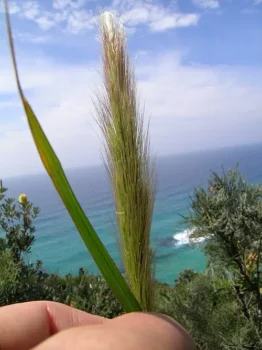
Clovenfoot Plumegrass: An Understated Ornamental Grass for Your Garden
If you’re looking for something a little different in the ornamental grass department, clovenfoot plumegrass (Dichelachne crinita) might catch your eye. This perennial grass brings a unique texture to garden spaces, though it’s not exactly what you’d call a household name in the gardening world.
What Exactly is Clovenfoot Plumegrass?
Clovenfoot plumegrass is a perennial grass that belongs to the larger family of grasses and grass-like plants. You might also see it listed under some older botanical names like Deyeuxia crinita, but Dichelachne crinita is the current accepted name. As its common name suggests, this grass has a somewhat feathery, plume-like appearance that can add interesting movement and texture to garden beds.
Where Does It Come From?
Here’s where things get a bit interesting from a native gardening perspective. While clovenfoot plumegrass has established itself in Hawaii, it’s actually not native to the islands. It’s what we call a naturalized plant – meaning it was introduced from elsewhere but has managed to reproduce and persist on its own in Hawaiian landscapes.
- Species observed
- No observations
Should You Plant Clovenfoot Plumegrass?
This is where being a thoughtful gardener comes into play. Since clovenfoot plumegrass isn’t native to Hawaii (where it’s currently found in the United States), you might want to consider native grass alternatives first. Native plants are generally better for local ecosystems, supporting native wildlife and requiring less maintenance once established.
That said, we don’t currently have information suggesting this grass is particularly invasive or problematic, so if you’re drawn to its unique characteristics, it’s not necessarily off-limits for your garden.
Growing Clovenfoot Plumegrass: The Basics
Here’s the honest truth – specific growing information for Dichelachne crinita is pretty limited in readily available sources. This isn’t uncommon for less popular ornamental plants. However, as a perennial grass, it likely shares some general characteristics with other ornamental grasses:
- Prefers well-draining soil
- May tolerate a range of light conditions
- Once established, likely requires minimal care
- May benefit from annual cutting back
Consider Native Alternatives
If you’re gardening in Hawaii and want to support local ecosystems, consider researching native Hawaiian grasses instead. Native plants are adapted to local conditions, support native wildlife, and often require less water and maintenance once established.
The Bottom Line
Clovenfoot plumegrass appears to be a relatively uncommon ornamental grass that could add texture to the right garden setting. However, with limited specific growing information available and its non-native status, it might be worth exploring native grass options first. If you do decide to grow it, approach it as you would other ornamental grasses – provide good drainage, appropriate spacing, and regular observation to ensure it’s thriving in your specific conditions.
As with any less common plant, you might need to do some detective work to find suppliers and gather more specific growing tips from other gardeners who have experience with this particular species.