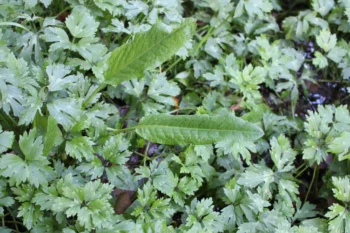
Clustered Dock: What Every Gardener Should Know About This Non-Native Perennial
If you’ve stumbled across the name clustered dock while researching plants for your garden, you might be wondering whether this perennial herb deserves a spot in your landscape. Let’s dive into what makes Rumex conglomeratus tick and whether it’s worth your gardening attention.
What Is Clustered Dock?
Clustered dock (Rumex conglomeratus) is a perennial forb – essentially a non-woody herbaceous plant that comes back year after year. As its name suggests, this plant produces small flowers in dense, clustered arrangements, though don’t expect anything showy. We’re talking about tiny, greenish blooms that are more functional than beautiful.
This European native has made itself at home across much of North America, establishing populations in 29 states and provinces from British Columbia to Florida. While it’s not native to our continent, clustered dock has proven quite adaptable to various American growing conditions.
Where You’ll Find Clustered Dock
Clustered dock has spread widely across North America, thriving in states including Alabama, Arizona, California, Florida, Illinois, New York, Oregon, Texas, and many others. It’s particularly well-established along both coasts and throughout much of the continental interior.
- Species observed
- No observations
Growing Conditions and Habitat Preferences
Here’s where clustered dock gets interesting from an ecological standpoint. This plant is quite the moisture-lover, earning Facultative Wetland status in most regions. This means it usually prefers wet conditions but can tolerate drier spots when needed. Only in Hawaii does it flip the script, preferring upland areas.
Clustered dock is hardy across USDA zones 3-10, tolerating both cold winters and hot summers. It’s not particularly picky about soil types and can handle full sun to partial shade conditions.
Should You Plant Clustered Dock?
Here’s the honest truth: clustered dock isn’t going to win any garden beauty contests. While it’s not classified as invasive, it’s definitely more weed than wow. This plant tends to show up uninvited in disturbed areas, waste places, and along roadsides rather than in carefully curated garden beds.
The flowers are wind-pollinated, so they don’t offer much for our beloved pollinators like bees and butterflies. If you’re looking to support local wildlife, you’d be much better served by choosing native alternatives.
Better Native Alternatives
Instead of clustered dock, consider these native options that offer similar growing conditions but much more garden appeal:
- Wild bergamot (Monarda fistulosa) – A pollinator magnet that thrives in various moisture conditions
- Blue flag iris (Iris versicolor) – Perfect for wet areas with stunning blue flowers
- Swamp milkweed (Asclepias incarnata) – Essential for monarch butterflies and beautiful to boot
- Cardinal flower (Lobelia cardinalis) – Brilliant red blooms that hummingbirds adore
If You Already Have Clustered Dock
Found clustered dock growing wild on your property? It’s not necessarily cause for alarm, but it’s not adding much value either. The plant is relatively easy to remove if you prefer to replace it with more desirable native species. Hand-pulling works well, especially when the soil is moist.
The Bottom Line
While clustered dock isn’t a garden villain, it’s certainly not a hero either. This non-native perennial falls into the meh category – it won’t cause ecological disaster, but it won’t enhance your garden’s beauty or wildlife value either. Your time, energy, and garden space would be much better invested in native plants that offer superior aesthetics, wildlife benefits, and ecological value.
Remember, every plant you choose is a vote for the kind of landscape you want to create. Why settle for ordinary when you can choose extraordinary native alternatives that will make both you and your local ecosystem happy?