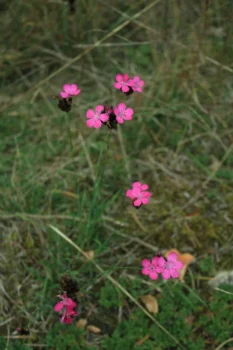
Clusterhead Pink: A Charming European Wildflower for American Gardens
Meet the clusterhead pink (Dianthus carthusianorum), a delightful little wildflower that’s been quietly making itself at home in parts of the northern United States. This European native brings old-world charm to modern gardens with its clusters of tiny pink blooms and grass-like foliage that sways gently in summer breezes.
What Is Clusterhead Pink?
Clusterhead pink is a perennial forb – essentially an herbaceous flowering plant that comes back year after year without developing woody stems. Unlike its showier garden pink cousins, this species produces small, densely packed flower clusters that create a more naturalized, wildflower appearance. You might also see it listed under its synonym, Dianthus atrorubens.
Where Does It Grow?
Originally from Europe, clusterhead pink has established itself in several northern U.S. states, including Michigan, New Hampshire, New York, and Wisconsin. It’s considered a non-native species that reproduces on its own in the wild, though it doesn’t appear to be problematically invasive in most areas.
- Species observed
- No observations
Why Gardeners Love (and Sometimes Question) This Plant
There’s plenty to appreciate about clusterhead pink, but like any non-native plant, it comes with considerations:
The Good Stuff
- Attracts butterflies, bees, and other beneficial pollinators
- Extremely low maintenance once established
- Thrives in poor, sandy soils where other plants struggle
- Drought tolerant and hardy in zones 3-8
- Adds delicate texture with its narrow, grass-like leaves
- Self-seeds readily for naturalized plantings
Things to Consider
- As a non-native species, it doesn’t support local ecosystems as effectively as native alternatives
- May self-seed more than desired in some garden situations
- Smaller flowers are less showy than many garden pinks
Perfect Places for Clusterhead Pink
This adaptable little plant shines in:
- Rock gardens and gravelly areas
- Wildflower meadows and naturalized spaces
- Cottage garden borders
- Areas with poor soil where other plants struggle
- Low-maintenance landscape areas
Growing Clusterhead Pink Successfully
Getting Started
Clusterhead pink is refreshingly easy to grow. Plant it in full sun – this European native really needs those bright rays to thrive. The key to success is well-drained soil; while it’s not picky about fertility, soggy conditions will quickly do it in.
Care and Maintenance
Once established, this plant practically takes care of itself. Water occasionally during the first season to help roots establish, then step back and let nature take over. Deadheading spent flowers will encourage more blooms, but many gardeners let some flowers go to seed for natural reseeding.
Propagation
Seeds are the easiest way to grow more plants. Collect seeds from mature flowers in late summer, or simply let the plant self-seed where you want more coverage.
Native Alternatives to Consider
While clusterhead pink isn’t problematically invasive, gardeners interested in supporting local ecosystems might consider these native alternatives:
- Wild bergamot (Monarda fistulosa) for similar pollinator appeal
- Prairie phlox (Phlox pilosa) for pink flowers and grass-like appearance
- Nodding onion (Allium cernuum) for similar growth habit and adaptability
The Bottom Line
Clusterhead pink offers gardeners an easy-care option for challenging sites, with the bonus of attracting pollinators. While it’s not native to North America, it appears to coexist peacefully with local plants in most situations. Whether you choose to grow it or opt for native alternatives, the key is creating beautiful, functional garden spaces that bring you joy while supporting the broader ecosystem.
Remember, every garden is different, and what works beautifully in a Michigan meadow might behave differently in your backyard. Start small, observe how plants perform in your specific conditions, and adjust your approach as you learn what works best for your space.